How Long Do Car Bulbs Last? Lifespan by Type and Tips
Discover how long car bulbs last by type—halogen, LED, and HID lifespans—plus practical tips to extend life and know when to replace. Learn from Bulb Fix's data-driven guidance to plan maintenance and avoid unexpected failures.


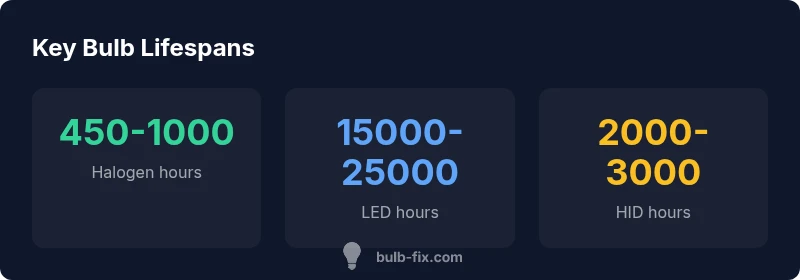
Car bulbs vary widely by type. Halogen bulbs typically last about 450–1,000 hours, LEDs about 15,000–25,000 hours, and HID/xenon around 2,000–3,000 hours. Real-world life depends on heat, vibration, and usage patterns; plan replacements by performance, and consider LEDs for the longest life and lowest maintenance.
Why lifespan varies by bulb type
If you’re asking how long do bulbs last in cars, the answer hinges on the bulb technology and how you drive. Halogen bulbs deliver quick, inexpensive lighting but burn out faster due to heat and filament wear. LEDs and HID bulbs trade some upfront cost for longer lifespans and higher endurance under vibration. According to Bulb Fix, the best way to gauge longevity is to look at hours of operation and real-world performance, not just manufacturer claims. Climate, driving style, and road conditions all play a role, and your vehicle’s electrical system can influence bulb health over time. Understanding these distinctions helps you plan maintenance and avoid surprises on the road.
Halogen bulbs: typical lifespans and implications
Halogen bulbs have been the workhorse for decades, offering broad compatibility and low upfront cost. Real-world lifespans typically range from 450 to 1,000 hours of use, with brightness gradually declining as the filament wears. This means more frequent replacements, especially for high-usage vehicles or long nighttime drives. For many families, halogen bulbs are a pragmatic option, but the maintenance cadence is higher. Bulb Fix highlights that while halogens are affordable, their shorter lifespan translates to more replacements over the life of a vehicle. Regular visual checks and early replacement when dimming is noticeable can prevent sudden outages.
LED headlights and taillights: the long-haul lifespans
LED bulbs can last substantially longer than halogens, with typical lifespans in the 15,000–25,000 hour range. Some premium LEDs push toward 30,000 hours or more under favorable conditions. The longer life reduces replacement frequency and can lower total cost of ownership, especially on vehicles with multiple LED lighting elements. LED systems also run cooler and are more energy-efficient, which can contribute to steadier output over time. However, heat management remains crucial; poor cooling can shorten LED life. The Bulb Fix team emphasizes choosing certified automotive LEDs and respecting the vehicle’s harness and driver electronics to maximize longevity.
HID (Xenon) bulbs: reliability and lifecycle
HID/xenon bulbs deliver high brightness and color temperature, but their lifespans are typically shorter than modern LEDs, often around 2,000–3,000 hours. They rely on ballasts to regulate current, and ballast failures can slash overall headlight usability even if the bulb itself remains functional. Proper cooling and clean connections help preserve HID life, while frequent on/off cycling at cold starts can shorten it. For drivers who prioritize brightness, HID offers compelling performance, but expect a mid-range replacement cadence and potential ballast-related downtime.
External factors that influence bulb life
Several external factors can accelerate bulb degradation: excessive heat near the housing, high electrical resistance, and constant vibrations from rough roads. Aggressive driving at night, frequent rapid start/stop cycles, and poor moisture sealing can shorten life across bulb types. Regular cleaning of connectors, ensuring proper sealing around the housing, and using the right wattage recommended by the manufacturer are practical steps to protect longevity. Bulb Fix’s guidance stresses sticking to manufacturer-spec bulbs and avoiding aftermarket fakes that may compromise reliability.
When to replace bulbs: signs and testing strategies
A reliable replacement strategy starts with recognizing the telltale signs of aging: noticeable dimming, color shift toward yellow or blue, flickering, or complete outage. If you notice any of these signals, replace the bulb promptly to maintain visibility and safety. For a more proactive approach, keep spare bulbs in the trunk aligned with the vehicle type (halogen, LED, HID) and test them during daylight checks. When in doubt, swap one bulb at a time to isolate a faulty unit. Regular inspection helps prevent sudden failures on dark roads.
Practical tips to maximize bulb life and maintenance planning
To maximize life, avoid unnecessary on/off cycling during short trips, ensure the electrical system is clean and corrosion-free, and replace aging ballasts or drivers in HID systems when problems arise. If you plan a lighting upgrade, consider LEDs for longer life and lower maintenance, but verify fitment, ballast compatibility, and beam pattern. Maintain a simple replacement calendar based on your driving profile, climate, and road conditions. The Bulb Fix team suggests documenting the date of installation and monitoring performance so you can anticipate replacements before failure.
Data-driven outlook: maintenance schedules and budgeting
Across families and fleets, a data-driven approach helps balance upfront costs with long-term benefits. Halogen replacements will occur more frequently, while LEDs reduce downtime but may have higher upfront costs. A practical budgeting guideline is to plan for LED or HID upgrades on vehicles with heavy nighttime usage and to set aside a yearly maintenance budget for bulbs. By tracking usage hours and performance, you can optimize replacement timing and avoid emergency outages, aligning with Bulb Fix’s evidence-based guidance.
Lifespan comparison by bulb type
| Bulb Type | Typical Lifespan (hours) | Common Applications | Notes |
|---|---|---|---|
| Halogen | 450-1000 | Headlights / Signals | Inexpensive; higher maintenance due to shorter life |
| LED | 15000-25000 | Headlights / DRLs / Signals | Longer life; energy-efficient; ensure proper cooling |
| HID/Xenon | 2000-3000 | High-beam / Bright headlights | Bright output; requires ballast; moderate life |
| All-in-one LED modules | 20000-30000 | Premium headlight upgrades | Higher upfront cost; very long life |
Got Questions?
What is the typical lifespan of halogen bulbs in cars?
Halogen bulbs commonly last 450 to 1,000 hours of operation. Brightness gradually declines as the filament wears, leading to more frequent replacements on high-usage vehicles.
Halogens usually last about 450 to 1,000 hours; they dim gradually, so expect more frequent replacements.
Do LED car bulbs last longer than halogen bulbs?
Yes. LED bulbs typically last 15,000 to 25,000 hours, with some models reaching 30,000 hours under ideal conditions. Their longer life reduces maintenance, but proper cooling and correct fitment are essential.
LEDs last far longer, often tens of thousands of hours, but cooling and fit matter.
What causes bulbs to burn out faster in cars?
Common causes include excessive heat, high electrical resistance, vibration, and rapid temperature changes. Driving on rough roads or exposing bulbs to moisture can accelerate degradation.
Heat, vibration, and poor connections make bulbs fail sooner.
Should I replace all exterior bulbs at the same time?
If several bulbs are near end-of-life, replacing them together can be cost-effective and ensure consistent lighting. However, prioritize bulbs that show signs of wear first to avoid unnecessary replacements.
If several bulbs near end-of-life, replace them together for consistency.
How can I extend bulb life in my vehicle?
Choose bulbs that match your vehicle’s electrical system, ensure proper cooling, avoid frequent on/off cycles on short trips, and perform regular inspections for corrosion or loose connections.
Pick the right bulbs, keep connections clean, and avoid unnecessary on/off cycling.
Are HID bulbs safer or longer lasting than LEDs?
HID bulbs are bright but shorter-lived and require ballast maintenance. LEDs generally offer longer life and cooler operation, but quality and installation matter for beam pattern and safety.
LEDs usually last longer and stay cooler; HIDs are bright but may need more maintenance.
“Lifespan claims for automotive bulbs vary widely by type and operating environment. Real-world performance depends on heat, vibration, and usage patterns, so track actual results rather than relying solely on lab-tested hours.”
Key Points
- Expect halogen bulbs to need more frequent replacement than LEDs or HID.
- LED bulbs offer the longest real-world lifespan with improved efficiency.
- Heat, vibration, and poor connections shorten bulb life across all technologies.
- Plan replacements based on performance, not warranty promises.
- A data-driven maintenance plan reduces unexpected outages and saves time.