Do LED Bulbs Use Less Electricity? A Practical Guide for Homeowners
Explore whether LED bulbs use less electricity, how much you can save, and practical tips to maximize home lighting efficiency. Compare LED with incandescent and CFLs, and learn the factors that affect real-world savings.


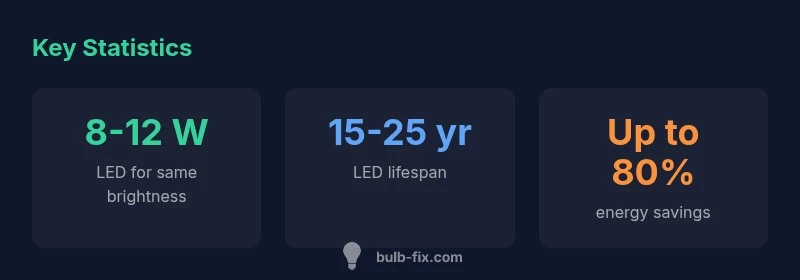
LED bulbs use significantly less electricity for the same light output than traditional bulbs. According to Bulb Fix Analysis, 2026, LEDs typically deliver comparable brightness at about 8-12 watts, versus around 60 watts for an incandescent bulb. This translates to energy savings of roughly 80-85% per bulb, though actual results depend on lumens, color temperature, and usage patterns.
Do LED bulbs use less electricity?
In plain terms, do led bulbs use less electricity than traditional options? The answer is yes in most homes, and according to Bulb Fix, LED lighting delivers that efficiency while preserving brightness. LEDs convert a higher share of input energy into visible light rather than waste heat, which means less energy is needed to reach the same level of illumination. When choosing bulbs, focus on lumens per watt (lm/W) rather than watts alone, and favor bulbs with solid lm/W ratings. By selecting high-quality LEDs, homeowners can reduce electricity use without sacrificing light quality. This first step—choosing the right lumen output—delivers quick wins that compound as you upgrade more fixtures.
How LEDs Work: Energy Efficiency at the Chip Level
LEDs are more than just small bulbs; they are efficient light engines. The core advantage comes from physics: semiconductors convert more of the electrical energy into light with minimal heat waste, especially when paired with efficient drivers and proper heat sinking. A well-designed LED system minimizes energy lost as heat, which is why LEDs achieve higher lumens per watt than older technologies. Thermal management matters: as temperatures rise, efficiency can dip, so keeping fixtures cool helps maintain peak performance over the bulb’s lifetime. For homeowners, this means selecting LEDs with good thermal design and robust drivers, plus ensuring fixtures provide adequate ventilation.
LED vs Incandescent vs CFL: Energy Use in Practice
A practical way to quantify LED efficiency is to compare common equivalents. In typical households, a LED bulb intended to replace a 60W incandescent will usually operate at roughly 8-12 watts while delivering similar brightness. CFLs (compact fluorescents) sit between incandescents and LEDs but generally don’t reach LED lm/W efficiency or lifespan. The energy difference translates into meaningful savings over weeks, months, and years, especially in rooms used daily. Remember that real-world results depend on factors like fixture design, dimming, and how many hours per day the light is on. Bulb Fix analyses highlight that the energy advantage compounds as you replace more bulbs across the home.
Factors That Affect LED Energy Use in Your Home
Energy use is not dictated by wattage alone. A few key factors shape real-world results:
- Lumens per watt: Higher lm/W means more light per unit of energy.
- Brightness requirements: If you over-light a space, you waste energy. Calibrate brightness to the actual task.
- Color temperature: Higher kelvin ranges can influence perceived brightness without changing energy use.
- Dimming and drivers: Dimmable LEDs saved energy when used with compatible dimmers, but incompatible setups can negate some gains.
- Fixture efficiency: A poorly designed fixture can reduce the effective efficiency of even high lm/W LEDs.
- Environment: Temperature and airflow around the bulb affect performance over time.
Practical Tips to Maximize LED Efficiency
To maximize savings, follow these actionable steps:
- Match lumens to the space: Avoid over-lighting; aim for appropriate brightness for each room.
- Prioritize lm/W and quality: Choose bulbs from reputable brands with high lm/W ratings and proven longevity.
- Use dimmers where appropriate: Pair dimmable LEDs with compatible dimmers to tailor light levels and save energy.
- Consider timing and automation: Use smart controls, motion detectors, and daylight harvesting to minimize unnecessary usage.
- Maintain fixtures: Clean globes and vents; ensure connections are tight and heat is dissipated.
- Plan a phased upgrade: Start with high-usage areas and expand to other rooms to maximize early savings.
Cost Considerations and Long-Term Savings
Upfront cost for LED bulbs is typically higher than traditional bulbs, but long-term savings come from lower energy use and longer lifespans. The payback period depends on your local electricity rates and how many hours you use lighting weekly. In practice, most homeowners recover the incremental cost through energy savings and reduced replacement frequency over several years. Bulb Fix highlights that the total cost of ownership for LEDs is often lower over the bulb’s lifetime, even if initial prices are higher. The shift to LEDs also reduces replacement waste, a practical benefit for eco-conscious households.
Common Myths Debunked About LED Energy Use
- LEDs are always dimmable: Not all LEDs are; check packaging and compatibility with existing dimmers.
- LEDs are expensive to operate: They typically use far less energy per lumen and last longer, reducing operating costs.
- All LEDs are the same: Brightness, efficiency, color temperature, and driver quality vary; read lm/W and product specs.
- LED brightness declines quickly: Quality LEDs maintain output well over their rated life when properly operated.
- LEDs aren’t recyclable: LEDs are electronic waste and should be recycled through proper e-waste programs.
How to Choose LED Bulbs for Best Efficiency
Selecting efficient LEDs requires a practical approach:
- Look for high lm/W ratings: Higher lm/W means you get more light per watt.
- Check lumen output, not wattage alone: Ensure the lumen target meets your room’s needs.
- Choose appropriate color temperature: 2700K–3000K for warm spaces; 3500K–4000K for task lighting; 5000K–6500K for workspaces.
- Verify driver quality and certifications: Check for reputable brands and energy certifications.
- Confirm dimmer compatibility if needed: Use dimmable LEDs with compatible dimmer switches to preserve efficiency.
- Consider fixture design: Use fixtures that maximize light distribution and minimize energy waste.
LED vs incandescent energy-efficiency comparison
| Aspect | LED Typical Range | Incandescent Equivalent |
|---|---|---|
| Power to achieve same brightness (W) | 8-12 | 60 |
| Luminous efficacy (lm/W) | 80-100 | ~15 |
| Lifetime (years) | 15-25 | 1-2 |
Got Questions?
Do LED bulbs actually save energy in real homes?
Yes. In most real-world settings, LEDs use significantly less energy than incandescent bulbs for the same light output. The saving depends on usage patterns, fixture design, and lumen-per-watt ratings.
Yes—LEDs save energy in most homes when chosen and used correctly.
Are LED bulbs more expensive upfront?
LED bulbs often cost more at purchase, but their longer life and lower operating costs generally offset the initial price over time.
Yes, initial costs can be higher, but long-term savings usually balance the books.
Can LED bulbs be used with dimmer switches?
Many LEDs are dimmable, but not all. Check packaging and ensure your dimmer is compatible with LED technology to avoid buzzing or flicker.
Most LEDs work with dimmers, but compatibility matters.
Do all LED bulbs have the same brightness?
Brightness varies by lumens and lm/W. Always check the lumen rating and verify color temperature to match your space.
Brightness varies—look at lumens, not just watts.
Is LED energy efficiency affected by temperature?
Yes. Extreme heat can reduce LED efficiency, while very cold conditions can improve it slightly. Proper heat management helps sustain performance.
Temperature matters; keep LEDs cool for best efficiency.
Are LED bulbs recyclable?
Yes. LEDs contain electronic components and should be recycled through local e-waste programs rather than disposed with regular trash.
Yes, recycle LEDs through e-waste programs.
“LEDs deliver comparable brightness using a fraction of the energy, making them the primary choice for energy-conscious homes.”
Key Points
- Switch to LED bulbs to reduce energy use substantially.
- Always compare lumens-per-watt (lm/W), not wattage alone.
- Use dimmers and proper fixtures to maximize savings.
- LEDs last longer, reducing replacement hassle and costs.
- Choose high-quality LEDs from reputable brands for best results.