Why Is It Better to Use an LED Instead of a Bulb
Learn why LED lighting outperforms incandescent bulbs in energy use, lifespan, and safety. A practical Bulb Fix comparison to guide homeowners.


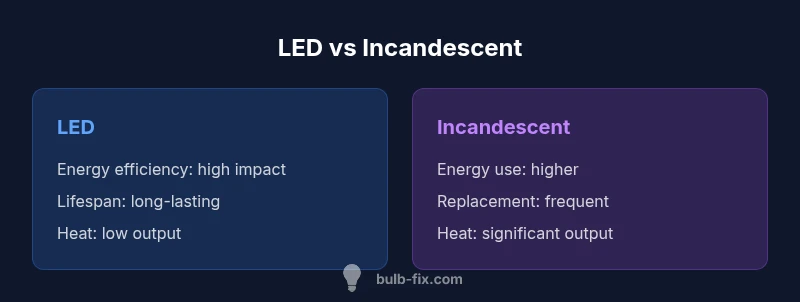
LED lighting typically uses far less energy, lasts much longer, and produces less heat than traditional bulbs. In practical terms, LEDs save electricity, reduce replacement costs, and lower fire risk, especially in enclosed fixtures. This comparison explains when an LED is the smarter choice, and where incandescent bulbs might still make sense, such as certain specialty applications.
Why is it better to use an LED instead of a bulb: an analytical overview
The question why is it better to use an LED instead of a bulb has a straightforward answer for most homeowners: LEDs deliver more value across energy, safety, and convenience. According to Bulb Fix, LED lighting aligns with modern homes by reducing power draw, minimizing heat, and offering durable performance. This article presents a structured comparison that foregrounds the practical differences you’ll encounter in daily use. While the term bulb broadens to many bulb-like products, the LED form factor consistently outperforms traditional incandescent options in several practical dimensions. You’ll also see where certain older fixtures or specific decorative fixtures might still favor a traditional bulb, but those are not the norm in typical living spaces.
We’ll start by clarifying what “LED” means in real-world terms: a diode-based light source that produces visible light with high efficiency, immediate full brightness, and a long service life. When you switch to LED, you become better prepared to reduce energy waste and lower maintenance tasks without compromising comfort or visibility.
Energy efficiency and operating costs
One of the clearest advantages of LEDs is energy efficiency. In everyday use, LED bulbs consume far less electricity than traditional incandescent bulbs for the same level of brightness. This lower energy draw translates to smaller monthly utility bills and a quieter operation pattern, since less energy is lost as heat. The practical impact is most noticeable in rooms that stay lit for long portions of the day, such as kitchens, living rooms, and home offices. For homeowners, the reduced energy use also means the bulb's life cycle cost tends to be lower, even when accounting for the higher upfront price of LED products. The Bulb Fix team emphasizes that the long-term value comes from fewer replacements and less heat to manage in warm rooms. When comparing options, consider not just wattage, but lumen output and the efficiency rating of the LED you’re considering. The goal is to match perceived brightness with actual energy use to avoid over-provisioning light.
Lifespan and maintenance considerations
LED bulbs are engineered to provide long service life with minimal maintenance. In real-world scenarios, LEDs typically require far fewer replacements than incandescent bulbs, which means less labor for households and lower material waste over time. The longer lifespan translates into predictable maintenance planning, especially for fixtures in hard-to-reach places like ceiling fans, hallway sconces, and outdoor lighting. Keep in mind that lifespan depends on operating conditions, such as voltage stability, ambient temperature, and whether the fixture is fully enclosed. In poorly ventilated or excessively hot fixtures, LED performance can degrade more quickly, so choosing the right bulb for the environment matters. Regular cleaning and ensuring fixtures aren’t overheated can help preserve long-term performance.
Heat generation and safety implications
Heat is a common concern with traditional bulbs, particularly in closed fixtures or in rooms that stay lit throughout the day. LEDs produce very little heat in the direction of illumination, which reduces warm air buildup and lowers the risk of heat-related damage to fixtures, wallpaper, or surrounding materials. The low heat output also makes LEDs safer in spaces where children or pets are present. This safety profile is a practical advantage for kitchens, bath vanities, and stair lighting where heat can be an issue with older technologies. While LED bulbs do generate some heat inside the fixture, that heat is typically managed by the fixture design and does not influence room temperature as dramatically as incandescent bulbs do.
Light quality, color temperature, and CRI
LEDs offer a wide range of color temperatures, from warm to cool whites, allowing you to tailor the ambiance of each room. Color rendering index (CRI) varies by product, but modern LEDs often provide crisp, accurate color perception, which improves tasks like cooking, makeup, and reading. When selecting LEDs, consider the desired mood and the fixture’s purpose. For example, warmer tones are common in living spaces for comfort, while cooler tones can aid focus in kitchens and home offices. Dimmable LEDs with good compatibility deliver smooth brightness transitions that feel natural, avoiding the harshness some early LED products could exhibit.
Dimming, controls, and compatibility
Dimming performance is a critical factor in choosing LEDs. Many LEDs are designed to work with common dimmer types, but some require compatible dimmers or specific driver electronics to avoid flicker or buzzing. If you’re upgrading an entire room, review existing switches and dimmers. In smart-home setups, LEDs can integrate with voice assistants and automation hubs, enabling schedules, scene lighting, and energy tracking. However, check the fixture and dimmer compatibility list from the manufacturer. When in doubt, test a single bulb in a representative fixture before proceeding with a full swap.
Installation realities: fixtures and electrical considerations
Not all fixtures are identical, and some older fixtures may need adapters or small rewiring to accommodate LED bulbs. Ensure your fixture is rated for LED use and that there are no heat-related restrictions (some enclosed fixtures require LEDs rated for enclosed use). In recessed can lighting, choose bulbs with appropriate beam angles to avoid glare. For outdoor fixtures, select bulbs with suitable weatherproof ratings and consider the photometric footprint to maintain consistent outdoor lighting coverage. Taking a moment to verify voltage compatibility and any certifications can prevent early failures and warranty issues.
Environmental impact and disposal considerations
LED bulbs are generally favored for their lower energy footprint and reduced waste due to longer lifespans. They do not typically contain mercury, which makes end-of-life disposal simpler than some fluorescent lamps. Recycling programs for electronics and lighting components often accept LEDs, helping recover materials responsibly. Before discarding, check local guidelines for electronics recycling and consider returning unused LEDs to a local supplier or recycling program. This approach aligns with durable home improvements and reduces environmental impact over the life of your lighting setup.
Common myths debunked about LEDs
A popular myth is that LEDs are too expensive or fragile to be practical. In reality, prices have fallen as technology matures, and the total cost of ownership is often lower than incandescent bulbs over time due to energy savings and fewer replacements. Another misconception is that LEDs require specialized wiring. Most LED bulbs work with standard sockets and fixtures, though some fixtures may need compatible dimmers or drivers. A third misconception is that LEDs aren’t bright enough; modern LEDs provide ample brightness and can be tuned to match the room’s needs.
Buying guide: selecting LED bulbs for a home
When shopping, assess color temperature to create the desired mood, CRI for accurate color perception, and dimmability if you use controls. Check the LED’s wattage-equivalent label to compare brightness with traditional bulbs, and verify compatibility with your fixtures, dimmers, and smart-home systems. Look for energy efficiency ratings and reputable certifications. If you’re unsure, start with a few bulbs in high-use areas to gauge performance before committing to a full replacement.
Comparison
| Feature | LED | Incandescent bulb |
|---|---|---|
| Energy usage | Significantly lower energy use | Higher energy use |
| Lifespan | Longer lifespan, reduced maintenance | Shorter lifespan, frequent replacements |
| Heat emission | Low heat output | High heat output |
| Color rendering | Good to excellent CRI options | Generally poorer CRI |
| Dimming compatibility | Good compatibility with many dimmers | Limited dimming range in older dimmers |
| Initial cost vs long-term value | Higher upfront cost, strong long-term value | Lower upfront cost, higher ongoing replacement costs |
Upsides
- Lower energy consumption leading to reduced utility bills
- Longer lifespan reducing maintenance trips
- Lower heat output improving safety and comfort
- Instant full brightness and stable color without warm-up
Drawbacks
- Higher upfront cost compared to some traditional bulbs
- Requires compatible dimmers or drivers in some fixtures
- Color temperature choices can be overwhelming for beginners
- Some very old fixtures may need adapters or rewiring
LEDs are the better choice for most homes
LEDs typically outperform traditional bulbs for residential lighting due to energy efficiency, longer lifespan, and safer heat characteristics. The value becomes most evident in rooms used frequently. The Bulb Fix team recommends prioritizing LEDs for new installations and major upgrades, while noting occasional specialty cases where a traditional bulb may still fit particular fixtures.
Got Questions?
Is LED lighting more energy efficient than incandescent bulbs?
Yes, LEDs use less energy to produce the same light output as incandescent bulbs. The difference translates to reduced electricity consumption and lower heat loss. In practical terms, LEDs help you lower utility bills over time while maintaining comfortable, consistent lighting.
Yes—LEDs use less energy and stay cooler, which saves money and reduces energy waste.
Can I replace all bulbs with LED in my home?
In most homes, you can switch many or all bulbs to LED. Some fixtures, dimmers, or specialty bulbs may need careful checking or adapter solutions. Start with high-use areas and test each fixture’s performance before doing the whole house.
In most homes you can switch most bulbs to LED; just watch for fixtures and dimmers.
Are LEDs dimmable?
Many LEDs are dimmable, but some require compatible dimmers and drivers. Check the product labeling and ensure your dimmer type matches the LED’s specifications. If in doubt, test a single bulb with your dimmer setup.
Many LEDs are dimmable, but confirm compatibility with your dimmer.
Do LEDs contain hazardous materials or need special disposal?
LED bulbs generally do not contain mercury, which makes disposal easier than some fluorescent lamps. Recycle LEDs through electronics or special lighting programs where available.
LEDs don’t have mercury, so recycling is simpler in many areas.
What should I look for when buying LED bulbs?
Look for color temperature, CRI, and dimmability. Check wattage-equivalent labels, fixture compatibility, and energy ratings. Prioritize reputable brands with good warranties and ensure the bulb fits your fixture size and socket.
Choose by color, brightness, and compatibility.
Key Points
- Choose LED bulbs for energy savings
- Expect longer life and fewer replacements
- Ensure dimmer and fixture compatibility
- Balance upfront cost with long-term value
- Check color temperature and CRI for best mood and accuracy