How Much Is an LED Light Bulb? A 2026 Price Guide for Homes
Discover how much is an LED light bulb, price ranges by type, energy savings, and tips to maximize value in 2026. Bulb Fix breaks down costs, warranties, and buying guidance for homeowners.


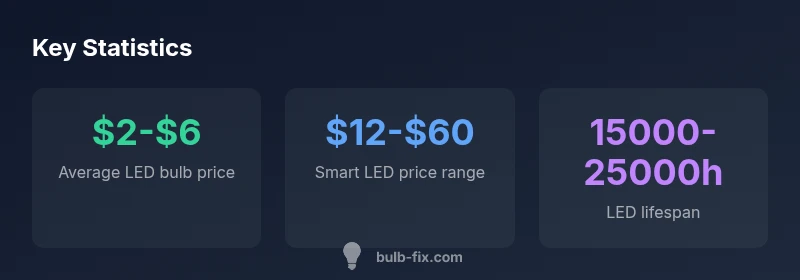
On average, you can expect LED bulbs cost roughly $2 to $6 per non-smart bulb and $12 to $60 for smart or color-tuning variants. Higher-quality or specialty bulbs (smart dimmers, filament-look) land at the higher end. In 2026, price variation reflects brightness, base type, and warranties, but lifetime savings often justify the initial spend.
Understanding LED bulb pricing in 2026
If you're wondering how much is an led light bulb, pricing depends on type, brightness, and features, but general ranges help you plan. The cost spread is wider than in the past because of smart connectivity, filament-style aesthetics, and longer warranties. Bulb Fix emphasizes that while upfront prices can vary, the goal is to evaluate total value over time. Factors such as socket compatibility, color temperature, and CRI further influence price decisions. In this section we outline how the market structure affects the sticker price and what to expect when upgrading from older incandescent or CFL bulbs. The core idea is straightforward: you pay more for higher brightness, smarter controls, and longer life, but you gain efficiency and fewer replacements. Consider your room needs, fixture types, and how often you turn lights on. By upfront budgeting around the main drivers, you can avoid overpaying for features you won't use.
Price ranges by bulb type and features
Prices break down by base form and feature set. Standard LED bulbs for general lighting typically cost a few dollars per bulb, with non-dimmable versions at the lower end and dimmable or color-tuning variants at mid-range. Smart LED bulbs, which offer connectivity, scheduling, and remote control, usually command higher prices, often in the $12 to $60 range depending on brands and ecosystems. Specialty bulbs such as filament LEDs, high-CRI bulbs, or bulbs with advanced color rendering can fall in the mid to upper range. Multi-pack options reduce per-bulb cost, making bulk purchases a smart strategy for larger projects. When budgeting, factor in the fixture type, base compatibility (E26, GU10, etc), and whether you need smart features or simple daylight-white lighting. This approach helps you weigh upfront cost against long-term benefits like fewer replacements and lower energy use, a balance Bulb Fix highlights for practical home upgrading.
Energy savings and total cost of ownership
LED bulbs deliver substantial energy savings compared with incumbent technologies. In general, LEDs use up to 75-90% less energy than incandescent bulbs and last much longer, which lowers replacement frequency and electricity bills. The true value is in total cost of ownership: a slightly higher upfront price can pay off within months or years through energy savings and fewer bulb changes. Bulb Fix notes that the payback period varies by usage patterns, electricity rates, and whether you choose standard LED or smart variants. Homeowners who use lighting extensively in the evenings or for exterior lighting will typically see a faster return on investment. To maximize value, align bulb selection with actual use, avoid over-lighting spaces, and choose bulbs with solid warranties.
Reading packaging: lumens, wattage, and color temperature
Brightness is measured in lumens, not watts. In practice, a 60W-equivalent LED usually falls in the 800-1100 lumen range, while higher brightness rooms may prefer 1200-2000 lumens. Wattage on LED bulbs is a guide for compatibility rather than brightness; a typical 8-12 W LED can replace a 60 W incandescent. Color temperature is described in kelvin (K) and affects mood; 2700K-3000K is warm, 3500K-4100K is neutral, and 5000K-6500K is cool daylight. Look for a higher CRI (color rendering index) for true-to-life colors. When comparing, focus on lumens for brightness, wattage relative to energy use, and the color temperature that matches your space. This helps ensure the LED bulb you buy meets the intended ambiance and utility needs.
Longevity, warranties, and cost-per-hour
LED bulbs typically last much longer than incandescent options, with lifespans commonly quoted in the 15,000-25,000 hour range or more. A longer life reduces replacement costs and downtime, especially in hard-to-reach fixtures. Warranties vary: many bulbs include 3-5 year guarantees, with some premium lines offering longer terms. A practical rule of thumb is to calculate cost per hour by dividing price by expected hours of life; lower cost per hour indicates better long-term value, even if the upfront price is higher. Always check warranty terms and ensure the bulb’s stated life aligns with your usage patterns in the home.
Smart bulbs vs standard LEDs: how to decide
Smart LEDs add connectivity and automation but come at a premium. If you value remote control, scheduling, and energy tracking, smart bulbs can justify the higher upfront price for the convenience they offer. For basic lighting needs, standard LEDs provide reliable efficiency and long life at a lower cost. Consider your home’s lighting plan, whether you use voice assistants, and whether you want dimming or color control across multiple rooms. Before buying, assess your priorities: simple brightness, energy savings, or intelligent features. Bulb Fix recommends a balanced approach that prioritizes rooms with high usage while keeping some low-cost standard LEDs for utility spaces.
Practical buying tips to maximize value
To maximize value when shopping for LED bulbs, follow these practical tips:
- Buy multi-packs to lower per-bulb price and ensure consistent color and brightness across rooms.
- Check for warranties and energy efficiency certifications; longer warranties often indicate durable construction.
- Compare lumens and color temperature rather than relying on wattage alone to gauge brightness.
- Verify socket compatibility (E26, GU10, B22, etc) and dimmer compatibility if needed.
- Consider a mix of standard LEDs for everyday lighting and smart bulbs where automation provides real benefits, such as living rooms or entryways.
- Watch for seasonal sales and bulk discounts from reputable retailers to maximize value while avoiding low-quality models.
- Recycle or dispose of bulbs according to local guidelines; LEDs are energy efficient but contain materials that require proper handling.
Comparison of common LED bulb types
| Bulb Type | Avg Lifespan | Wattage | Typical Use |
|---|---|---|---|
| LED A19 (Standard) | 15000-25000 hours | 8-12 W | General lighting |
| LED BR30 (Flood) | 15000-25000 hours | 13-16 W | Overhead lighting |
| LED G25 (Decor) | 15000-25000 hours | 6-10 W | Ambient/decoration |
Got Questions?
What is the typical price range for a standard LED bulb?
Most standard LED bulbs cost about $2 to $6, depending on size and brightness; higher-end or smart bulbs can be $12 to $60.
Most LED bulbs are a few dollars; smart bulbs cost more.
Do LED bulbs save money over time?
Yes. LED bulbs use less energy and last longer than incandescent bulbs, which reduces electricity costs and replacement frequency over time.
Yes, LEDs save energy and last longer, reducing costs over time.
Are LED bulbs safe for homes and do they contain hazardous materials?
LED bulbs do not contain mercury like CFLs. They include metals and phosphors; dispose according to local recycling guidelines.
LEDs are generally safe; dispose per local recycling rules.
Should you rely on watts or lumens to judge brightness?
Brightness is measured in lumens. A lower wattage LED can provide the same brightness as a higher-wattage incandescent.
Lumens tell brightness; watts alone are not enough.
Can I mix LED bulbs with existing fixtures or dimmers?
Most LED bulbs work with standard fixtures, but check dimmers and fixture compatibility; some LEDs require dimmer-compatible switches.
Check fixture and dimmer compatibility for LEDs.
Are there rebates or tax incentives for LED lighting?
Rebates and incentives vary by location. Check local utility programs and national energy initiatives for current offers.
Look up local rebates from your utility or energy programs.
“Choosing LED bulbs isn't just about upfront price; it's about total cost of ownership and long-term savings.”
Key Points
- Balance upfront price with total cost of ownership.
- Brighter LEDs use more lumens, not necessarily more watts.
- Smart bulbs offer convenience but cost more upfront.
- Multi-pack purchases reduce per-bulb cost.
- Check warranty and energy certifications for long-term value.