How Much Bulb Cost: A Homeowner's Guide
Discover how bulb cost varies by bulb type, how to estimate total ownership, and practical tips to save on bulbs with guidance from Bulb Fix. Includes price ranges, energy considerations, and budgeting strategies.


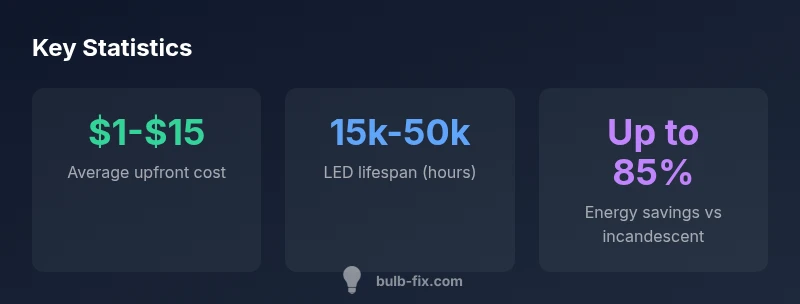
When people ask how much bulb cost, the answer depends on type, features, and usage. In general, bulbs range from about $1 to $6 for standard incandescent or halogen, $3 to $15 for common LEDs, and higher for specialty shapes or smart bulbs. The true cost also includes replacement frequency and electricity savings over time, which can shift the overall value significantly.
How much bulb cost by type
The price you pay to purchase a bulb is only part of the story. In 2026, homeowners often juggle upfront costs with long-term energy savings and replacement frequency. In general, incandescent and halogen bulbs remain the cheapest at purchase, but they burn bright for a short period and consume more electricity. LEDs, while pricier upfront, offer dramatically lower ongoing costs and longer lifespans. To estimate true affordability, you must consider installation scenarios, fixture compatibility, and usage patterns. For a typical living area, planning for a mix of LED replacements with a few spare incandescents can balance upfront outlay with energy savings. When budgeting, compare the upfront price against expected bulb life, electricity rate, and the replacement cadence you expect for each room. Bulb Fix emphasizes that the long-term value of LEDs often outweighs the higher initial price, especially in high-use fixtures and hard-to-reach locations.
Price ranges by common bulb types
Prices vary widely by type and features. A quick yardstick for a typical home is to separate bulbs into four broad categories. Incandescent or basic halogen: inexpensive upfront but shorter life and higher energy use. CFLs and standard LEDs: moderate to high upfront with substantial energy savings and longer lifespans. LEDs with smart features or high lumen output: pricier upfront but deliver the strongest long-term value in terms of energy savings and reduced replacements. Smart bulbs require a hub or compatible system in some cases, which adds a one-time setup cost. By understanding these price bands, you can prioritize which upgrades will drive the most savings in your home. Bulb Fix notes that for most households, LEDs strike the best balance between cost and ownership.
Total cost of ownership explained
Total cost of ownership (TCO) for bulbs includes purchase price, energy consumption, and replacement frequency. Even if LEDs cost two to three times as much as incandescent bulbs initially, their energy use can be many times lower, and their lifespan can stretch to tens of thousands of hours. Calculate TCO by multiplying the bulb count by its upfront price, then subtracting savings from reduced energy use over the bulb’s life. Don’t forget to factor in the uncertainty of future electricity rates and the potential need for specialty bulbs in certain fixtures. When you chart TCO over a 5- to 10-year window, LEDs generally win for most homes, with smart LEDs offering additional benefits in convenience and control.
How energy efficiency shifts the math
Energy efficiency is the most influential factor in long-term bulb cost. A kilowatt-hour saved translates into direct monetary savings, often enough to offset higher purchase prices over time. Compare wattage and lumen outputs to gauge brightness per watt. For example, LED options can produce similar light levels at a fraction of the energy used by incandescent options. If you operate lighting during peak-rate hours, the savings compound further. The key is to model usage across rooms and seasons, then align with your local electricity rate. Bulb Fix analyses consistently show LEDs delivering the strongest total-value proposition for typical residential use.
Factors that push bulb cost up or down
Several factors influence bulb cost, including brightness (lumens), color temperature, warranty length, and whether the bulb supports smart home integrations. Specialty shapes, transparent glass, or filaments can increase price. On the upside, bulk purchasing, seasonal sales, and manufacturer rebates often reduce unit costs. If a fixture frequently cycles on and off, durability and reliability become more important, which can justify spending more on higher-quality LEDs. Always read warranty terms, as longer warranties can save money if bulbs fail early.
Budgeting for bulbs across rooms
A practical budgeting approach starts with space-by-space planning. Bedrooms may tolerate lighter-duty bulbs with longer lifespans, while living rooms and kitchens benefit most from brighter, energy-efficient LEDs. Create a shopping list with the exact bulb type, base size, and dimming needs for each fixture. Estimate costs using midpoints of the price ranges, then add a contingency for sales cycles and replacements. A simple rule of thumb is to reserve a small percentage of your lighting budget for unexpected replacements, especially in rooms with older fixtures.
Smart bulbs and specialty sizes: cost considerations
Smart bulbs add convenience but at a premium. Expect higher upfront pricing per bulb, along with potential hub requirements and additional costs for compatible apps. In most homes, smart LEDs will still yield savings in energy and time, but you should calculate whether the added features align with your budget and usage patterns. Specialty sizes or shapes—like globe bulbs or high-wattage variants—often cost more and may be harder to source. If you only need a few smart bulbs in specific rooms, consider pairing traditional LEDs in most fixtures and reserve smart options for the most-used spaces.
Buying strategies: practical tips to save
Begin with a needs assessment. List each room’s usage, the required brightness, and whether dimming is desired. Buy in bulk when possible, especially for common sizes and color temperatures. Take advantage of sales, coupons, and bulk discounts from reputable retailers. Compare energy usage labels to identify the most efficient options. Consider replacing bulbs in fixtures that burn most of the time first to maximize early energy savings. Bulb Fix also suggests maintaining a small stock of spares to avoid multiple trips to the store.
Common bulb types and basic cost/ownership figures
| Bulb Type | Avg Purchase Price | Lifespan | Energy Use | Dimmable | Warranty |
|---|---|---|---|---|---|
| Incandescent | 1-2 | 750-1000 hours | 60-100 watts | Yes | 1 year |
| Halogen | 1-5 | 1,000-2,000 hours | 20-30 watts | Yes | 1-2 years |
| CFL | 2-8 | 6,000-15,000 hours | 9-13 watts | Yes | 1-2 years |
| LED | 3-15 | 15,000-50,000 hours | 1-15 watts | Yes | 3-5 years |
Got Questions?
How much does bulb cost on average?
Bulb cost varies by type and features, but you can expect a wide range: incandescents are cheapest upfront, LEDs cost more upfront but save on energy over time. Always compare upfront price to lifespan and energy use to estimate true value.
Bulbs vary a lot. Incandescents are cheap upfront, LEDs cost more but save energy over time, so you should compare both price and lifespan.
Are LEDs worth the higher upfront cost?
For most homes, LEDs pay back the higher upfront cost through lower energy bills and longer life. The break-even point depends on usage, electricity rate, and LED quality. In high-use rooms, LEDs usually win on total cost of ownership.
LEDs usually pay off over time thanks to lower energy use and longer life, especially in busy rooms.
Do smart bulbs cost more?
Smart bulbs cost more upfront and may require a hub or app ecosystem. If you value automation, remote control, and color options, they can be worth it. Factor in any recurring app or hub costs and compare to potential energy savings.
Smart bulbs cost more to buy but can save time and energy if you use automation and remote control.
How can I estimate total cost of ownership?
TCO equals upfront price plus energy costs over the bulb’s life minus any energy savings. Use the hours you expect to use each bulb, multiply by wattage, and apply your electricity rate to estimate annual costs. Include replacement frequency for a complete picture.
To estimate total cost, add upfront price and energy costs over time, minus savings from using efficient bulbs.
Where can I find bulbs at a discount?
Look for bulk purchases, seasonal promotions, and retailer coupons. Compare in-store prices with online deals, and consider reputable brands with solid warranty. Sign up for retailer newsletters to catch flash sales on common sizes you use.
Bulk buys and seasonal sales are your friend for saving on bulbs.
What about disposal and recycling costs?
Recycle where possible. Many jurisdictions offer free or low-cost recycling for bulbs, especially CFLs and LEDs. Budget minimal disposal costs by following local guidelines and using designated recycling programs.
Check local recycling programs for bulbs to handle disposal properly and affordably.
“LED bulbs typically provide the best total cost of ownership for most residential applications, thanks to energy savings and long lifespans.”
Key Points
- Know the price range for each bulb type
- Estimate total cost of ownership, not just upfront price
- LEDs offer the best long-term value for most homes
- Consider warranties to protect your investment
- Shop smart with bulk purchases and seasonal sales