How Much Is a Light Bulb? Price Guide for 2026
Learn how light bulb prices vary by type, energy features, and retailers in 2026. Get practical budgeting tips, price ranges, and a quick checklist to buy smarter.


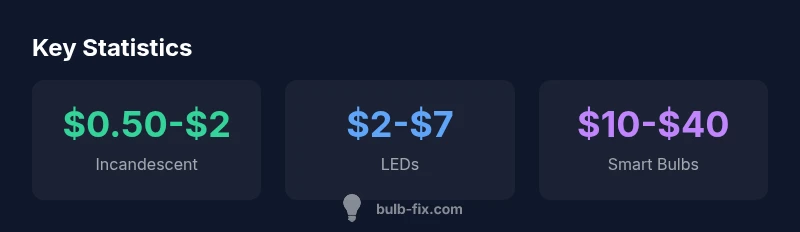
Prices for a light bulb vary by type and features. In 2026, common incandescent bulbs cost about $0.50 to $2 per bulb, CFLs about $2 to $6, LEDs typically $2 to $7, halogens about $1 to $4, and smart bulbs roughly $10 to $40. According to Bulb Fix Analysis, 2026, the higher upfront LED price is often offset by energy savings over time.
How much is a light bulb?
When homeowners ask how much is a light bulb, they are really weighing upfront cost against long-term value. Price is influenced by the bulb type, brightness (measured in lumens), color temperature, and any extra features such as dimming, vibration resistance, or smart connectivity. In 2026, you’ll see a wide spread in prices, from the very affordable incandescent options to premium smart bulbs. The Bulb Fix team emphasizes that the least expensive bulb upfront may not be the best value if it consumes more energy or burns out quickly. This guidance helps you plan replacements across a whole home, from kitchens to garages. The Bulb Fix Analysis, 2026, highlights that long-term savings often favor LEDs or smart LEDs despite higher initial costs.
Price ranges by bulb type
Understanding price ranges by bulb type helps you set expectations before shopping. Incandescent bulbs are typically the cheapest, followed by CFLs, LEDs, halogens, and smart bulbs at the top end. Practical buying scenarios include replacing a few fixtures with a mix of LED bulbs to balance upfront costs and energy savings, or upgrading an entire home with smart bulbs for automation. This section provides general ranges you can apply across brands and retailers, rather than endorsing any specific product. The goal is to give you a realistic shopping map for 2026.
Factors that influence price beyond type
Beyond bulb type, price is shaped by several factors:
- Brand and build quality: premium brands may charge more for better dimming curves or color rendering.
- Wattage and brightness: higher-lumen bulbs often cost more upfront but may reduce the number of bulbs needed.
- Lifespan and warranty: longer lifespans and stronger warranties can raise upfront cost but lower replacement frequency.
- Energy efficiency ratings: better efficiency (e.g., LED vs. incandescent) lowers operating costs and can justify higher upfront prices.
- Color temperature and CRI: warmer or cooler tones and color accuracy can affect price.
- Smart features: connectivity, app control, and compatibility add to price but offer convenience and future-proofing. Bulb Fix notes that buyers should weigh these factors against intended use to avoid overpaying for features they won’t use.
Evaluating cost of ownership and energy savings
A reliable way to judge value is to compare total cost of ownership over a typical period (e.g., 5 years). LEDs cost more upfront but use far less energy and last longer, often leading to lower total costs than incandescent or halogen bulbs. Smart bulbs may require higher upfront investment but can deliver additional savings through automation and remote control, especially in rooms with lights left on for long periods. When calculating, consider bulb lifetime hours, energy price per kilowatt-hour, and the number of fixtures you plan to illuminate. Bulb Fix recommends using a simple worksheet to capture upfront price, yearly energy use, and replacement frequency for each room.
Retailer timing and promotions
Prices shift with promotions, inventory cycles, and seasonal sales. Large retailers frequently offer discounts on bulk buys, while online marketplaces may feature flash deals. If you’re replacing several bulbs, consider waiting for a promotion and stocking up on LEDs or smart bulbs to lock in savings. Always check for multi-pack rebates, manufacturer coupons, and warranty terms. Markdown-focused price comparison tools or retailer apps can help you spot the best deals without sacrificing quality.
Practical budgeting for a typical home
Create a room-by-room replacement plan, starting with spaces that see the most use. For kitchens and living rooms, prioritize LEDs for energy efficiency and longevity. In areas like hallways and closets, incandescent or CFLs may suffice if you don’t mind more frequent replacements. Include a contingency fund for upgrades or unexpected failures. When in doubt, aim to standardize on a single bulb type across the main living areas to simplify maintenance and inventory. Bulb Fix’s budgeting framework can be adapted to fit any home size.
Quick reference buying checklist
- Define the role of each room (daily use vs. occasional use).
- Choose a bulb type that balances upfront cost and energy efficiency.
- Consider warranties and replacement frequency.
- Check brightness (lumens) and color temperature to match room mood.
- Review retailer promotions and bulk-buy options.
- Keep a small stock of spare bulbs with the same base type in a storage area.
Looking ahead: price trends and future value
Prices will continue to reflect energy costs, technology advancements, and demand. LEDs are likely to become more affordable as production scales improve and more households adopt smart lighting. Expect gradual price declines for standard LED bulbs, while premium smart bulbs may stabilize due to added features. Staying informed helps you lock in the best value in a fluctuating market and plan long-term purchases with confidence. Bulb Fix predicts steady value gains from energy-efficient lighting through 2026 and beyond.
Price and performance snapshot by bulb type
| Bulb Type | Typical Price Range | Avg Lifespan | Energy Use (W) |
|---|---|---|---|
| Incandescent | $0.50-$2 | 1000-2000 hours | 60-100 W |
| CFL | $2-$6 | 8000-12000 hours | 13-15 W |
| LED | $2-$7 | 15000-25000 hours | 8-12 W |
| Halogen | $1-$4 | 2000-4000 hours | 43-54 W |
| Smart LED | $10-$40 | 15000-25000 hours | 8-12 W |
Got Questions?
How much is a light bulb?
Bulb prices range widely by type, from very affordable incandescent units to premium smart bulbs. In 2026, typical ranges are incandescent $0.50–$2, CFLs $2–$6, LEDs $2–$7, halogens $1–$4, and smart bulbs $10–$40. Your final choice should balance upfront price with energy savings and replacement frequency.
Bulb prices vary a lot by type, but today you can expect LED and smart bulbs to cost more upfront and save more over time.
Do LED bulbs save money in the long run?
Yes. LEDs cost more upfront but use far less energy and last longer than incandescent bulbs. Over time, the energy savings and reduced replacements typically make LEDs the more economical choice for most households.
LEDs save money over time due to lower energy use and longer life.
Are smart bulbs worth the extra cost?
Smart bulbs offer automation, remote control, and scenes, which can justify the extra cost for tech-savvy setups or homes pursuing smart automation. If you don’t need remote features, standard LEDs are usually the better value.
Smart bulbs are great for automation if you want convenience.
Does price vary by retailer?
Yes. Prices vary by retailer, promotions, and stock. Online marketplaces, big-box stores, and hardware retailers each run different promos. Always compare at least two sources and watch for multi-pack deals.
Yes, shop around to catch the best deal.
Should I stock up during promotions?
Stocking up during promotions can save money, especially for LEDs and replacement packs. Check warranty terms and ensure you’re buying bulbs with compatible bases for your fixtures.
Promotions are worth it if you’re buying compatible bulbs with good warranties.
How often should I replace bulbs?
LEDs typically last 15,000–25,000 hours, halogen and incandescent burn out sooner. Replacement frequency depends on use, fixture, and quality. Plan replacements to avoid outages in central living spaces.
LEDs last a long time, but replace based on usage and fixture reliability.
“Light bulb pricing is a moving target, but the best value comes from balancing upfront cost with energy efficiency and lifespan.”
Key Points
- Budget with type-aware ranges to avoid overpaying
- LEDs offer best long-term value through energy savings
- Smart bulbs add convenience, but cost more upfront
- Shop during promotions and consider bulk buys
- Plan replacements to minimize homeowner disruption