How to Change Fluorescent Bulb to LED: A Home Retrofit Guide
Learn to safely upgrade from fluorescent to LED lighting, including ballast considerations, bypass options, and practical installation steps for DIY homeowners. This Bulb Fix guide covers planning, tools, step-by-step instructions, testing, and tips for energy savings.


By the end, you will upgrade from fluorescent to LED lighting in a safe, code-compliant way. Start by turning off power at the breaker and testing the fixture, then choose LED tubes rated for your fixture or a ballast-bypass option if needed. This guide shows you how to assess, rewire (if required), install LEDs, and test for proper operation.
Safety and Planning
According to Bulb Fix, safety and planning are the foundations of a successful LED retrofit. Upgrading from fluorescent to LED can reduce energy use and maintenance, but it involves working with live electrical fixtures. Before you touch anything, switch off the circuit at the breaker and use a non-contact voltage tester to confirm there is no voltage at the fixture. Wear safety glasses and durable gloves to protect against broken tubes and sharp tombstones. Keep a clear workspace, and have a flashlight handy in case the fixture sits in a closet or ceiling.
Next, identify your fixture type: is it a linear fluorescent fixture with removable tubes, a compact CFL sitting in a standard Edison socket, or an integrated LED replacement? The retrofit path depends on ballast status and the lamp type. If you’re unsure, consult the fixture’s label or the manual; if the label is missing, assume you’ll bypass the ballast and rewire for LEDs. This reduces the risk of flicker or premature failure and helps you meet current energy codes recommended by Bulb Fix Analysis, 2026.
Assess Your Fixture: Tube vs CFL vs Integrated LED
Most homes use one of three configurations when upgrading from fluorescent to LED: a linear tube fixture, a compact CFL fixture, or a ceiling-mounted integrated LED module. Tube fixtures may use a ballast, while CFLs sit in a standard socket with no ballast. Integrated fixtures replace the lamp and ballast entirely. Determining which path to take hinges on ballast type and compatibility. If the fixture has a label on the inside cover, note the ballast type (magnetic vs electronic) and the lamp size (e.g., T8, T12) as well as the base styles (G5, tombstones, etc.). If there is no label, start with a plan that bypasses the existing ballast and uses a direct-wire LED setup. This approach tends to provide the most reliable performance and aligns with modern energy codes discussed in Bulb Fix Analysis, 2026.
Understanding these differences helps you avoid common missteps, such as using a ballast-compatible LED tube in a fixture that requires ballast bypass, which can cause flicker or reduced lamp life. Planning also includes considering color temperature, lumen output, and whether you want a warm, neutral, or cool white for the space.
Choose Your LED Upgrade Path
There are two common paths when upgrading from fluorescent to LED: ballast-compatible LED tubes (Type A) and ballast-bypass LED tubes (Type B). A third option involves LED bulbs designed for fixtures with standard sockets, which is practical for CFLs or simpler fixtures. Type A tubes work with your existing ballast and can be easier to install, but they may offer smaller energy savings and depend on ballast compatibility. Type B bypasses the ballast entirely and wires the LEDs directly to the supply; this tends to maximize efficiency and lamp life but requires more wiring work and careful adherence to safety standards. Each path requires a slightly different wiring approach and may affect warranty coverage. In general, a ballast-bypass installation yields the best long-term results if you’re comfortable with rewiring, while a ballast-compatible approach can be a good middle-ground solution for DIY homeowners. Bulb Fix’s guidance emphasizes selecting a path that matches your fixture and usage patterns.
Step-by-Step Conversion Process Overview
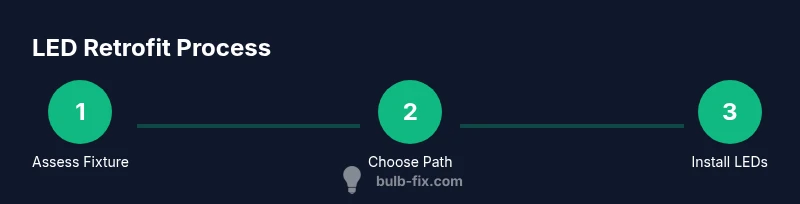
The actual conversion process can be broken into clear phases: preparation and safety, fixture assessment, path selection, ballast handling or bypass, LED installation, testing, and final cleanup. For each phase, you’ll need the right tools, careful measurement, and adherence to local electrical codes. The majority of successful home retrofit projects keep a small notebook or set of photos to document wire configurations before you cut or remove any components. This documentation helps ensure you can reverse any changes if needed and proves invaluable for future maintenance. Always follow the chosen path’s instructions for bypassing or reusing the ballast, and verify that the LED tubes or bulbs are compatible with your fixture’s end caps and mounting hardware. In all cases, plan for a gradual retrofit if you’re unsure about wiring changes, and consult a licensed electrician if you encounter any uncertainty.
Troubleshooting, Safety, and Common Pitfalls
After installation, power the fixture to test for proper operation. If you notice flicker, buzzing, uneven light, or rapid heating, double-check your ballast bypass connections, tube orientation, and end-cap compatibility. Loose wires or mismatched end caps are common sources of trouble. If you used Type A tubes, confirm the ballast still matches the LED’s current rating. If you bypassed the ballast, ensure there are no exposed conductors and that all connections are properly insulated with electrical tape or wire nuts. Maintain a tidy lumen pattern by ensuring tubes are seated evenly. If any hazard emerges or you’re uncertain about wiring, pause and contact a licensed professional. Safety is the priority in every retrofit.
During the first days of operation, monitor for flicker, hum, or inconsistent brightness. Differences in color temperature across the lighting can reveal mismatched components. If you rely on dimming, verify that the new LEDs are dimmable and that your dimmer is compatible with LED technology.
Energy Savings, Maintenance, and Warranties
LED lighting typically offers lower energy consumption and reduced maintenance compared to fluorescent setups. Savings depend on fixture type, usage hours, and the LED product chosen. LED tubes and bulbs typically require fewer replacements due to longer lifespans and improved reliability. Maintenance tends to focus on periodic cleaning and checking for flickering or dimming signals that indicate a mismatched ballast or wiring issue. When selecting products, review warranty terms; a good LED retrofit often comes with a longer warranty than traditional fluorescents, and some manufacturers provide ballast bypass guarantees. By choosing high-quality LEDs and following safe installation practices, homeowners can enjoy ongoing energy savings and improved light quality for years to come.
Authority Sources
To support practical guidance, consult authoritative resources and ensure compliance with local codes:
- Energy.gov: LED lighting and energy efficiency information (https://www.energy.gov/energysaver/led-lighting)
- OSHA.gov: General electrical safety guidelines (https://www.osha.gov)
- NFPA.org: Lighting and electrical safety standards (https://www.nfpa.org)
Tools & Materials
- Non-contact voltage tester(Verify power is out at the fixture before touching any wires)
- Safety glasses(Protect eyes from glass shards and debris)
- Work gloves(Protect hands during tube removal and wiring)
- Screwdrivers (Phillips and flathead)(Loosen end caps and access covers)
- Wire strippers(Prepare wires for new connections)
- Electrical tape(Insulate splices and exposed conductors)
- Wire nuts or push-in connectors(Secure and insulate wire connections)
- LED tubes or LED bulbs(Confirm compatibility with fixture type (ballast-bypass or ballast-compatible))
- Ballast bypass kit (if bypassing)(Only if you plan to bypass the ballast and rewire)
- Step ladder or stable stool(Access ceiling fixtures safely)
Steps
Estimated time: 60-120 minutes
- 1
Turn off power and verify
Go to the circuit breaker and cut power to the fixture. Use the non-contact tester to ensure no voltage is present at the fixture before touching any wiring.
Tip: If you’re unsure about which breaker controls the fixture, switch off power at the main panel and label the circuit for future reference. - 2
Remove fluorescent tubes
Carefully rotate and release each tube from the fixture’s end caps. Set tubes aside in a safe container to prevent breakage. If using a ladder, have a helper steady the ladder.
Tip: Wear gloves when handling tubes to avoid cuts from broken glass. - 3
Inspect ballast and wiring
Open the access cover and locate the ballast and wiring. Determine whether the ballast is magnetic or electronic and note the lamp type and end-cap style.
Tip: Take a photo of the wiring before removing anything so you can reference it later. - 4
Decide on the upgrade path
Choose ballast-compatible LED tubes (Type A) or ballast-bypass LEDs (Type B). If you’re uncertain, plan for ballast bypass for best long-term efficiency.
Tip: Ballast bypass may require rewiring, so prepare for a more involved installation. - 5
Bypass the ballast (if chosen)
If bypassing, disconnect and remove the ballast, then wire the fixture directly to the mains per the LED tube instructions. Re-cap and insulate all live conductors.
Tip: Label wires clearly and keep a clean wire route to avoid stress on connections. - 6
Install LED tubes or bulbs
Insert the LED tubes or bulbs into the end caps, ensuring correct orientation and seating. Tighten any channel screws or brackets as needed.
Tip: Double-check that the LEDs are facing the same direction for uniform light. - 7
Reconnect power and test
Restore power at the breaker and briefly test the fixture. Confirm consistent light output and watch for any flicker or buzzing.
Tip: If there’s flicker, re-check end-cap connections and ballast compatibility. - 8
Finalize and clean up
Secure all covers, tidy wiring, and dispose of old tubes properly. Record the retrofit details for future maintenance.
Tip: Keep receipts and warranty cards with the fixture for future reference.
Got Questions?
Is it safe to DIY ballast bypass and rewiring?
Ballast bypass involves wiring changes that carry risk. Always cut power, test for absence of voltage, and follow local electrical codes. If unsure, hire a licensed electrician.
Ballast bypass can be risky. Turn off power, test, and consider professional help if you’re unsure.
What tools do I need for changing fluorescent bulbs to LED?
You’ll typically need a voltage tester, screwdrivers, wire strippers, electrical tape, wire nuts, and LED tubes or bulbs. A ballast bypass kit is optional depending on your method.
Basic tools plus the LED lighting you’ll install.
Can I use LED tubes with the existing ballast?
Some LED tubes are ballast-compatible, but performance varies by ballast type. For maximum efficiency, bypass the ballast when possible.
Yes, some LED tubes work with ballasts, but bypassing often yields better results.
Will switching to LED save energy?
LEDs generally use less energy and need less maintenance than fluorescents. The exact savings depend on usage and fixture selection.
LEDs usually save energy and reduce maintenance, depending on setup.
What color temperature should I choose?
For most homes, 3000K-4000K is comfortable and versatile. Warmer tones (2700K-3000K) are cozy, while 5000K-6500K feels daylight-like for task lighting.
Most homes favor around 3000K to 4000K for comfort and clarity.
What about dimming with LED upgrades?
If dimming is needed, choose dimmable LED tubes or bulbs and a compatible dimmer. Non-dimmable LEDs won’t respond and may flicker.
Pick dimmable LEDs with a compatible dimmer.
Watch Video
Key Points
- Plan safety-first and verify power before starting
- Choose a ballast-bypass path for best efficiency when comfortable with wiring
- Ensure LED compatibility with fixture type and end caps
- Test thoroughly and document changes for future maintenance