Is LED or Bulb Better? A Practical Comparison for Homes
Explore LED vs incandescent bulbs: compare energy use, lifespan, cost, light quality, and buying tips to determine which is better for your home.


LED bulbs generally outperform traditional bulbs on energy efficiency, lifespan, and running costs, making them the better overall choice for most homes. If you value warm light at the lowest upfront price, incandescent bulbs may still fit some niche uses. However, for long-term savings and reliability, LED wins in most situations.
Is LED vs Bulb Better? Framing the Question
For most homeowners, the real question is not a blanket yes or no but which bulb type fits your priorities: energy bills, maintenance, light quality, and upfront costs. So, is led or bulb better for typical home lighting? According to Bulb Fix, the landscape has shifted decisively toward LED technology in the past decade. The Bulb Fix team found that even when you account for initial purchase price, LEDs typically deliver lower total energy costs and fewer replacements over the life of the bulb. This is especially true in high-use rooms such as kitchens, living rooms, and home offices, where a long-lived bulb reduces interruptions and maintenance tasks. As you read, keep in mind that personal preferences, fixture types, and usage patterns can tilt the balance. In short, LED often wins on efficiency and reliability, but incandescent bulbs still hold appeal for mood lighting and ultra-warm light in certain fixtures.
Core Metrics: Energy, Lifespan, and Cost of Ownership
When comparing LED bulbs with traditional bulbs, focus on three core metrics: energy efficiency, lifespan, and total cost of ownership. LEDs convert a higher portion of electricity into useful light, meaning you get more brightness per watt and dramatically lower operating costs over time. Lifespan is another two-sided factor: LEDs last many times longer than incandescent bulbs, reducing replacement frequency and labor. The upfront price for LEDs is typically higher, but the longer service life and lower energy use often offset this gap. This section translates those ideas into practical expectations: in rooms with frequent use, LEDs tend to save both energy and replacements; in rooms with minimal use, the savings are present but smaller. Bulb Fix Analysis, 2026 reinforces that energy savings and longevity are the most decisive advantages of LEDs for most homes.
Light Quality and Perceived Brightness
Light quality matters as much as efficiency. LEDs come in a range of color temperatures—from warm to cool—allowing you to tailor the mood for each room. High Color Rendering Index (CRI) LEDs render colors more naturally, which helps with tasks like cooking or makeup application. Some people worry about the “clinical” feel of certain LEDs, but modern LEDs can closely mimic incandescent warmth when selected carefully. Dimming performance is another factor: good-quality LEDs paired with compatible dimmers deliver smooth, stable light without noticeable color shift. For those who want a single bulb solution, choosing an LED with a warm color temperature and high CRI offers a close match to traditional bulbs while preserving energy efficiency.
Dimming, Compatibility, and Fixtures
Compatibility matters. Not all LEDs dim equally, especially when used with older dimmer switches. If you have vintage fixtures or a dimmer that isn’t LED-rated, you may experience flicker or buzz. The simplest fix is to replace the dimmer with an LED-compatible model and select LEDs labeled as dimmable. Fixture design can also influence performance; enclosed fixtures can trap heat and shorten LED life unless you pick bulbs rated for such environments. In modern homes, smart bulbs and integrated lighting systems pair especially well with LEDs, enabling precise scheduling, color adjustments, and energy monitoring.
Environmental Impact and Disposal
LED bulbs are mercury-free, which reduces disposal concerns compared with some older technologies. They also use energy more efficiently, meaning less energy is burned for the same amount of light, contributing to lower household emissions. End-of-life considerations include recycling options; many retailers and municipalities offer bulb recycling programs, especially for LEDs and fluorescent lamps. If you’re transitioning an entire house, plan a staged replacement to spread costs and minimize waste. By choosing LEDs, you’ll likely reduce your environmental footprint over the bulb’s lifetime.
Practical Buying Guide: How to Choose
Before buying, determine the lumen output you need rather than relying on watts. A higher lumen rating means brighter light without increasing energy use. Decide on color temperature based on room function: warmer light for living spaces, cooler light for task areas like kitchens. Consider CRI for accurate color rendering in important tasks. Check for a compatible dimming option if you plan to dim the lights, and verify that the bulbs are rated for any enclosed fixtures. Finally, compare long-term costs rather than upfront prices alone; LED bulbs may cost more upfront but usually pay back through energy savings and reduced replacements. Bulb Fix recommends checking for warranties and selecting trusted brands with reputable performance.
Real-World Scenarios: Room-by-Room Recommendations
In kitchens, LED bulbs with bright, neutral temperature are common for visibility and food safety. Living rooms often benefit from warm LEDs that create a cozy ambiance. In bedrooms, dimmable warm LEDs can mimic incandescent mood lighting while preserving energy efficiency. Home offices should favor brighter, neutral LEDs with high CRI to reduce eye strain during long tasks. Outdoor lighting benefits from LEDs’ resistance to frequent on/off cycles and their long lifespan. When in doubt, start with a few rooms to test performance before a full transition. This staged approach helps you evaluate light quality, dimming reliability, and color rendering in your actual home environment.
Common Myths Debunked
Myth: LEDs are not as bright as incandescent bulbs. Truth: LEDs can produce comparable or higher brightness with much lower energy use. Myth: LEDs cannot produce warm light. Truth: Warm LEDs are widely available and closely resemble traditional warmth. Myth: LED bulbs cannot be recycled. Truth: Recycling options exist, and many programs handle LED disposal responsibly. Myth: The upfront cost is prohibitive. Truth: While LEDs cost more upfront, the long-term savings are often substantial due to energy efficiency and lifespan.
Decision Framework: A Simple Plan to Decide
Step one is to identify rooms where brightness and color accuracy matter most. Step two: choose LEDs with appropriate lumen output and a warm color temperature for living spaces. Step three: verify dimming compatibility if you use dimmers. Step four: assess total cost of ownership by estimating energy savings and replacement frequency. Step five: consider environmental impact and disposal options. Following this framework, most households will find LEDs to be the better, safer, and more economical choice over time. The Bulb Fix team’s guidance is to start with LEDs for high-use areas and reserve incandescent bulbs for niche lighting needs where warm glow is essential.
Comparison
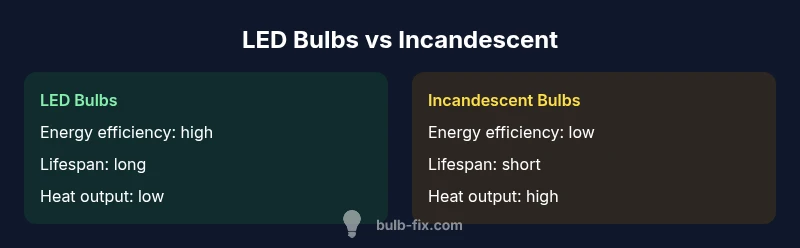
| Feature | LED Bulb | Incandescent Bulb |
|---|---|---|
| Energy Efficiency | high efficiency | low efficiency |
| Lifespan | long-lasting | short-lived |
| Heat Output | low heat | high heat |
| Upfront Cost | moderate | low |
| Replacement Frequency | infrequent replacements | frequent replacements |
| Best For | long-term savings and modern fixtures | mood lighting and budget-focused use |
Upsides
- Significantly lower energy use over time
- Very long lifespan reduces replacements
- Excellent compatibility with dimmers and smart controls
- Mercury-free and better for the environment
Drawbacks
- Higher upfront price than traditional bulbs
- Some older fixtures may need adapters or rewiring
- Early LED options could have uneven color rendering
LED bulbs are the recommended default choice for most homes
LEDs outperform incumbents in energy efficiency and longevity, driving long-term savings. Choose incandescent bulbs only for specific mood lighting or intentionally warm aesthetics in select fixtures. The Bulb Fix team endorses LEDs as the primary option for most households.
Got Questions?
What are the main differences between LED and incandescent bulbs?
LED bulbs use far less energy and last much longer than incandescent bulbs. They’re available in a range of color temperatures and can be dimmed with compatible fixtures. Incandescents provide warm light and are cheaper upfront, but burn more energy and require more frequent replacements.
LEDs save energy and last longer, with warm options available. Incandescents are cheaper upfront but cost more over time.
Are LED bulbs worth the upfront cost?
In most homes, yes. The upfront price is offset by lower energy bills and fewer replacements over the bulb’s life. For short-term projects or very low-usage fixtures, an incandescent bulb may still be reasonable.
Yes, LEDs are typically worth it for long-term savings.
Do LEDs work with existing dimmers?
Many LEDs are designed to be dimmed, but not all are compatible with every dimmer. Use LED-rated dimmers and check the packaging for dimming compatibility to avoid flicker.
Choose LEDs labeled as dimmable and use an LED-compatible dimmer.
What about light color quality in LEDs?
LEDs come in a range of color temperatures from warm to cool. High CRI LEDs render colors more accurately, which is important for tasks like cooking or makeup.
Look for high CRI white LEDs for better color accuracy.
Are there environmental concerns with LED bulbs?
LEDs are mercury-free and generally reduce energy consumption, contributing to lower emissions over time. Recycling options exist and many communities offer bulb recycling programs.
LEDs are eco-friendly and recycle-ready.
Can incandescent bulbs be used in smart homes?
Incandescent bulbs can work with some smart home setups, but LEDs are typically more compatible with modern smart hubs and energy features. The ecosystem often favors LED bulbs for automation.
LEDs fit best with smart home systems.
Key Points
- Prioritize energy efficiency and lifespan when selecting bulbs
- Consider total cost of ownership, not just upfront price
- Match color temperature and CRI to room function
- Ensure dimmer compatibility for LED use
- Plan disposal and recycling as part of the transition