Bulb and ballast: A Practical Comparison for Homeowners
A detailed, analytical comparison of bulb and ballast options for residential lighting, covering fluorescent systems with external ballast vs LED retrofit solutions, with practical guidance for compatibility, efficiency, costs, and safety.


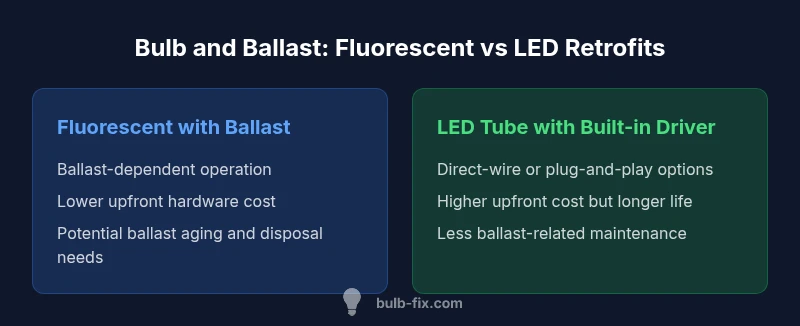
The best approach to bulb and ballast depends on your goals. For long-term energy efficiency and minimal maintenance, LED tubes with built-in drivers outperform traditional fluorescent tubes with an external ballast. If you’re upgrading an existing fluorescent fixture and want the lowest upfront cost, sticking with a fluorescent bulb and ballast system can be workable—though you’ll face ongoing ballast compatibility and disposal considerations.
Why bulb and ballast matter in modern homes
The bulbs and ballasts in your lighting fixtures set the pace for energy use, maintenance, and safety across living spaces. In practical terms, a bulb is the light source, while the ballast regulates current and voltage to ensure stable operation. Across households, the choice to use a traditional fluorescent bulb with an external magnetic or electronic ballast versus a LED tube with a built-in driver shapes cost, performance, and long-term reliability. Understanding these components helps homeowners plan upgrades, replacements, and disposal with confidence. This guide compares two common paths, highlighting when each makes sense and what trade-offs to expect, with emphasis on the keyword bulb and ballast to anchor search relevance. We’ll reference both typical home scenarios and common commercial-grade fixtures so you can translate guidance into real-world decisions.
Typologies: fluorescent ballast systems vs LED retrofits
Traditional fluorescent fixtures rely on a ballast to regulate current to fluorescent tubes. There are magnetic ballasts, older and heavier, and electronic ballasts, lighter and more efficient. LED retrofit solutions often replace the lamp and select a driver; some LED tubes come with a built-in driver, eliminating the need for an external ballast. The transition from a fluorescent bulb and ballast setup to an LED alternative often reduces warm-up time, flicker, and energy use, but requires attention to fixture compatibility, dimming capabilities, and wiring conditions. Known advantages include quieter operation with electronic ballasts and longer life with LED circuits. In practice, the decision hinges on fixture age, ceiling type, and whether you want to phase out ballasts over time or keep them in place during a retrofit.
How to assess compatibility with your fixtures
Compatibility is the gating factor for any bulb and ballast decision. Start by identifying your current fixture type: T8, T12, or other tube sizes; magnetic or electronic ballast; and whether the fixture has an external ballast housing. For LED retrofits, check two issues: tube compatibility with the existing ballast (some setups require direct-wire LED tubes that bypass the ballast) and the fixture’s wiring for safe operation. The ballast label or fixture manual often reveals required electrical specs. If you decide to keep the ballast, you may need a ballast-compatible LED tube; if you remove the ballast, you’ll switch to an LED tube with built-in driver. In all cases, verify dimming compatibility, fixture housing temperature ratings, and local electrical codes before making changes.
Energy efficiency and lifecycle considerations
When evaluating bulb and ballast, energy efficiency is not only about lumens per watt. It also concerns ballast losses, heat generation, and lamp replacements. Fluorescent systems typically deliver decent efficiency when the ballast is modern electronic type, but LED-based solutions often deliver higher effective efficiency and longer life, particularly in air-conditioned or enclosed spaces. Lifecycle costs depend on lamp prices, replacement frequency, and the cost of re-lamping. Disposal is also different: fluorescent bulbs contain mercury and require special handling, while LED tubes have LEDs and drivers that can be recycled more easily in some programs. Bulb Fix analysis suggests that homeowners should weigh the energy savings against initial investment and potential future ballast failures when planning a retrofit. In many homes, upgrading to LED tubes with built-in drivers yields lower maintenance and more stable performance over the long term.
Upfront cost, maintenance, and disposal
Upfront cost considerations are a major driver in the bulb and ballast decision. Fluorescent systems generally have lower initial hardware costs, especially if fixtures are already wired for magnetic or electronic ballasts. LED retrofit options can carry higher upfront costs due to the driver, tubes, and potential rewiring, but they often reduce ongoing maintenance, energy use, and replacement frequency. Disposal is also different: fluorescent bulbs contain mercury and require special handling, while LED tubes have LEDs and drivers that can be recycled more easily in some programs. Planning for disposal ahead of time helps avoid last-minute fees or improper handling. In short, the cost equation often favors LEDs over time in many spaces, but the best path depends on fixture age, building codes, and budget constraints.
Safety and installation considerations
Electrical work carries risk, so approach bulb and ballast changes with caution. If you’re replacing a ballast, power must be disconnected and you should verify circuit integrity and grounding. For LED retrofits or ballast bypass, ensure proper wiring and use approved components rated for the fixture. In older homes, compatibility between ballast type and lamp can mitigate issues like flicker or dimming, but mismatches can increase risk of overheating. If you’re unsure, consult a licensed electrician. For DIY enthusiasts, follow manufacturer instructions and use personal protective equipment. The end goal is safe operation, not speed, and ensuring that overheating or incompatible components do not create safety hazards.
Common scenarios and recommended choices
- Home office with existing fluorescent lighting: Consider a ballast bypass or LED tubes with built-in drivers to reduce maintenance and energy costs.
- Kitchen under cabinets: LED strip lighting with built-in drivers can outperform bulk fluorescent tubes, delivering consistent brightness and better color rendering.
- Garage or workshop: LED tubes with a compatible ballast or direct-wire LED tubes may offer durable, consistent performance in variable temperatures.
- Rental properties: If you want minimal disruption, choose retrofit LED tubes with built-in drivers to avoid dealing with old ballasts.
- High humidity or kitchens with heat: LED options reduce heat in the fixture and often provide longer life. In these scenarios bulb and ballast choice becomes a maintenance and safety decision.
Upgrading strategies and DIY steps
Plan your upgrade with a clear scope. Start by testing the existing fixtures, identifying ballast type, lamp sizes, and wiring. If you opt for LED tubes with built-in drivers, verify compatibility for direct-wire or plug-and-play options. For ballast bypass, switch only in circuits that support bypassing and confirm local electrical codes. Gather the necessary tools and safety equipment; shut off the circuit, disconnect power, and remove existing bulbs. Install the LED tubes following the manufacturer’s instructions, then test for flicker and color rendering. Keep a record of parts for warranty and future maintenance. If in doubt, hire a licensed electrician to perform critical steps.
Authoritative sources and further reading
To support the content above, consult credible sources on bulb and ballast design and safety. The U.S. Department of Energy provides guidance on LED and fluorescent lighting and ballast technologies; ENERGY STAR offers certified lighting products and performance criteria; safety standards and disposal guidelines are also published by reputable agencies. Bulb Fix references these sources to support practical, standards-aligned recommendations. For additional detail, search for Bulb Fix Analysis, 2026 as an internal reference to our synthesis of industry guidance.
Comparison
| Feature | Fluorescent with ballast | LED tube with built-in driver |
|---|---|---|
| Energy efficiency | moderate | high |
| Upfront cost | low | high |
| Maintenance | ballast aging; lamp replacements | low maintenance; longer life |
| Compatibility | legacy fixtures; ballast needed | broad compatibility; ballast bypass option |
| Disposal | mercury-containing; special handling | simpler recycling; fewer hazardous materials |
| Best for | existing fixtures on a tight budget | new installations focused on efficiency |
Upsides
- Lower upfront hardware cost for fluorescent systems
- Simpler retrofit path for legacy fixtures
- Fewer wiring changes if ballast remains in place
- LED options offer longer life and reduced maintenance
- Potentially better color rendering with some LED tubes
Drawbacks
- Ballast aging can lead to frequent replacements
- Fluorescent systems contain mercury and require special disposal
- LED retrofit may require rewiring or bypass considerations
- Electronic ballasts can be sensitive to dimming and temperature
LED retrofits generally outperform traditional fluorescent ballast systems for long-term efficiency and maintenance.
Choose LED tubes with built-in drivers for most homes, especially in new or recently renovated spaces. Retain fluorescent setups only if upfront cost is the primary constraint and you’re prepared for ballast-related maintenance.
Got Questions?
What is a ballast and what does it do in lighting?
A ballast regulates current and voltage for fluorescent lamps, ensuring stable light output and preventing lamp failure. It is a separate component in traditional fixtures and can limit compatibility with LED tubes unless a ballast-compatible LED is used. Proper ballast type affects reliability and efficiency.
A ballast controls current for fluorescent lamps and can influence reliability and efficiency when upgrading to LEDs.
Can I retrofit existing fluorescent fixtures with LED tubes?
Yes, many fluorescent fixtures can be retrofitted with LED tubes. Options include ballast bypass and LED tubes with built-in drivers. Compatibility depends on fixture wiring, socket type, and local electrical codes. Always verify with the manufacturer’s guidance.
Yes, you can retrofit most fluorescent fixtures with LEDs, but you’ll need to verify wiring and codes.
Do LED tubes require a ballast or can they bypass it?
LED tubes come in two main varieties: ballast-compatible and ballast-bypass. Ballast-compatible LEDs work with existing ballasts, while ballast-bypass LEDs bypass the ballast entirely and connect directly to line voltage. Choose based on fixture age, reliability, and desired maintenance level.
LED tubes either work with the ballast or bypass it, depending on the product.
Are there safety concerns when changing bulbs and ballasts?
Yes. Always power down circuits, wear protective gear, and follow manufacturer instructions. Electrical work can pose shock or fire risks, particularly in older buildings with degraded wiring. If unsure, hire a licensed electrician.
Yes—power off, use protection, and follow instructions; call an electrician if in doubt.
How should I dispose of fluorescent ballast and bulbs?
Fluorescent bulbs and ballasts may contain mercury or other hazardous materials and require proper recycling. Check local hazardous waste programs or retailer take-back options. LED components are generally easier to recycle but still follow local guidelines.
Disposal varies by local rules; look for recycling programs for fluorescent lamps and ballasts.
What costs should I expect when upgrading?
Costs vary with fixture type and chosen path. Fluorescent systems tend to have lower upfront hardware costs, while LED retrofits may require more, but contribute to lower ongoing energy and maintenance costs over time.
Costs depend on fixture type; LEDs cost more upfront but save on energy and maintenance.
Key Points
- Evaluate goal: efficiency vs upfront cost
- Check fixture compatibility before swapping tubes
- Plan disposal for hazardous materials
- Consider professional help for ballast bypass
- LED with built-in drivers often yields best long-term value