What bulb wattage for kitchen: A practical guide
Learn the right bulb wattage for kitchens—practical ranges, bulb types, and room-by-room guidance. Bulb Fix offers safe, energy-efficient lighting tips.


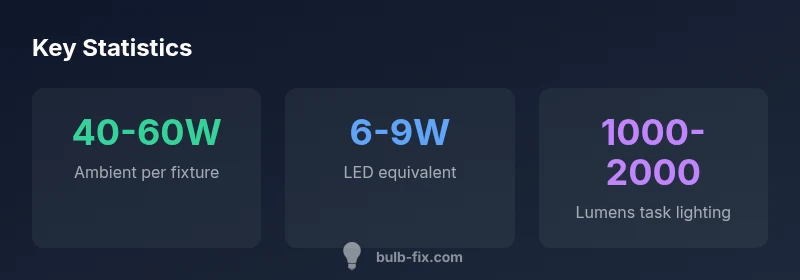
In kitchens, ambient light usually replaces the equivalent of 40-60 watts per fixture in incandescent terms, while LED options run around 6-9 watts each. For work zones, add brighter task lighting totaling roughly 1,000–2,000 lumens. Aim for warm 2700–3000K color temperature for a welcoming space. Layer ambient, task, and accent lighting to adapt for cooking and entertaining.
Understanding Kitchen Lighting Goals
Understanding the intent behind kitchen lighting is the first step to choosing watts. The kitchen is a multirole space: it's a place for meal prep, casual dining, reading recipes, and entertaining. Because tasks vary—from chopping to measuring to plating—your lighting must support both visibility and ambiance. For homeowners asking what bulb wattage for kitchen, the core idea is layering: establish a comfortable base level (ambient), provide bright but focused task lighting over work zones, and consider accent lighting for mood and color accuracy. Color temperature also matters; warmer tones (around 2700K) feel inviting, while neutral to cool tones (3500K–4000K) improve clarity for precise tasks. In practice, many kitchen lighting plans use LED bulbs because they deliver the most lumens per watt and have long lifespans. Start by mapping your layout: islands, counters, sinks, and dining areas each benefit from different lighting levels. This planning reduces glare and ensures safety when using sharp tools or hot surfaces.
Ambient Lighting: The Base Layer
Ambient lighting sets the stage for the kitchen. It fills overall space so you can see without harsh contrasts. For most kitchens, this base should provide comfortable brightness without creating glare on glossy surfaces. LED downlights or recessed modules are common choices because they spread light evenly and consume little energy. When planning ambient levels, think in terms of total lumens per fixture rather than raw watts; LEDs around 6-9W can approximate 40-60W incandescent output while delivering more consistent color and better efficiency. A practical approach is to target a dimmable ambient layer that works with your daily routines—breakfasts, late-night snack runs, and entertaining. By combining a soft base with strategically placed fixtures, you achieve a balanced look that reduces eye strain and makes kitchen tasks safer.
Task Lighting: Brightness for Work Zones
Task lighting focuses on the work zones where precision is essential—countertops, the stove, and the sink area. Bright, crisp light improves contrast and reduces shadows that hinder chopping, measuring, and garnish work. The goal is a higher luminance in these spots without creating hotspots elsewhere. For LEDs, a practical target is about 1000-2000 lumens total distributed across fixtures over counters and islands. Place task lighting under cabinets or above work surfaces to minimize glare on glossy surfaces. Dimmable options help adapt for cooking, reading recipes, or plating. When selecting bulbs, prioritize high CRI values (above 90) to ensure food colors appear natural, which is especially important for food safety and presentation.
Layered Lighting Strategy: Combining Layers
A single light source rarely suffices in a kitchen. Layered lighting combines ambient, task, and accent to satisfy function and mood. Mix recessed ambient lights with under-cabinet strips for a smooth base, plus pendant fixtures over an island for focal points. Dimmers are a simple way to adjust layers as needed, from bright prep to cozy dinners. If color accuracy matters (for plating or selecting herbs), choose bulbs with high CRI and consistent color temperature. Remember that wattage is a stand-in for perceived brightness in incandescent terms; LED wattage is lower but lumen output is higher, so compare lumens and wattage on product specs. This approach ensures kitchens feel welcoming yet practical, without over- or under-lighting any area.
Choosing Bulb Types: LED, Halogen, and Alternatives
LEDs dominate modern kitchen lighting due to efficiency, longevity, and instant full brightness. Halogen bulbs provide warm, familiar light but consume more energy and run hotter, making them less common for general ambient lighting. Fluorescent options exist for open-plan spaces but often require more care with color accuracy. When evaluating bulbs, focus on LED options that match the desired ambient or task lumens, and align color temperatures with the room’s mood. For kitchen work surfaces, select higher CRI LEDs (90+). If you have existing fixtures, check compatibility with dimmers and transformer types before buying. Bulb wattage matters less than lumen output and color temperature in achieving practical, pleasant, and efficient kitchen lighting.
Practical Sizing Guidelines by Kitchen Layout
The size and layout of your kitchen affect lighting needs. A compact galley may require denser ambient lighting with a few bright task zones, while a large open-plan kitchen benefits from multiple ambient rings and stronger island lighting. Start by estimating lumens per square foot and allocate roughly 1,000–2,000 lumens for task zones depending on counter length. For ambient layers, aim for even distribution that minimizes shadows. In longer run spaces, staggered lighting along the ceiling produces a balanced glow. Keeping fixtures at appropriate heights reduces glare and ensures safety when accessing knives and hot surfaces. Always test lighting in real use and refine placement for comfort and visibility.
Color Temperature and Mood: 2700K vs 4000K
Color temperature influences how food looks and how the space feels. Warmer tones around 2700K create a cozy, inviting kitchen, ideal for dining areas and late-evening cooking. Neutral to cool temperatures around 3000K–4000K improve color discrimination for precise tasks, helpful during food prep and cleanup. For most homes, a warm option near 2700K paired with a 3000K task lighting layer offers versatility. If your kitchen doubles as a workspace or home office, consider adjusting to a brighter 3500K–4000K in work zones. Remember to maintain consistent lighting temperatures across fixtures to avoid color mismatches that can look odd in photos or during meals.
Safety, Energy Efficiency, and Installation Tips
Safety matters: use bulbs rated for enclosed fixtures if appropriate, and verify fixture compatibility with dimmers or smart controls. Energy efficiency improves with LED bulbs, which generate less heat and reduce cooling loads. When wiring or fixture replacement is needed, hire a licensed electrician for safe installation. Consider updating older dimmer switches, fixtures, and cords to reduce the risk of shorts or overload. For color accuracy in food presentation, prioritize high-CRI LEDs and avoid mixed-color temperature fixtures in a single zone. Regularly clean fixtures to maintain brightness and rediscover older lighting’s effectiveness.
Common Pitfalls and Quick Fixes
Common mistakes include over-lighting kitchen work zones, using mixed color temperatures in the same area, and underestimating lumens for task tasks. A quick fix is to add under-cabinet lighting to eliminate shadows on counters and implement dimmers to adjust for different activities. If glare appears on reflective surfaces, adjust the angle of pendant lights or relocate fixtures slightly to reduce glare. Reassess the layout after a few weeks of use and test lighting during daytime and night to achieve a comfortable balance.
How to Calculate Your Needs: Quick Worksheet
To tailor wattage, create a quick worksheet: map your kitchen zones (island, counters, sink, dining area) and assign ambient lumens per zone. For each zone, estimate 1000–2000 lumens for tasks, depending on surface area and countertop tasks. Convert to LED wattage using manufacturer lumen-per-watt values (roughly 100–200 lumens per watt for typical LEDs, depending on the model). Round up to account for color temperature needs and future use. Finally, add dimmers and consider smart controls to optimize energy use and mood across different activities.
Sizing guide for kitchen lighting
| Kitchen Scenario | Ambient Lighting (W eq) | Task Lighting (lumens) | Color Temperature |
|---|---|---|---|
| Small kitchen | 40-60 | 1000-1500 | 2700K |
| Medium kitchen | 60-75 | 1500-2000 | 3000K |
| Open-plan | 75-100 | 2000-3000 | 3500K |
Got Questions?
What is the recommended wattage for kitchen ambient lighting?
For ambient lighting, aim for an incandescent-equivalent of about 40-60W per fixture. In LED terms, this translates to roughly 6-9W per bulb, depending on brightness. Always prefer dimmable options when possible to adjust for different tasks and times of day.
Ambient lighting should approximate 40-60W per fixture in incandescent terms; with LEDs that’s about 6-9W per bulb, and dimmers help adjust intensity.
Should I prefer warm or cool lighting in the kitchen?
Warm lighting (around 2700K) creates a welcoming feel, good for dining and evening prep. Cooler tones (3000K–4000K) improve clarity for precise tasks. A mix can work well, with warm ambient light and slightly cooler task lighting.
Warm light is cozy; task areas can benefit from a cooler option for clarity. A mix often works best.
Is it safe to mix LED and incandescent bulbs in the same kitchen?
Mixing bulb types is generally okay if fixtures support it, but LED bulbs are recommended for efficiency and consistent color. Ensure similar color temperatures to avoid odd color shifts.
Mixing is usually fine if fixtures support it, but keep color temperature consistent for a harmonious look.
How many light fixtures does a typical kitchen require?
The number depends on layout and room size. A compact kitchen may need 3-5 fixtures total, while open-plan designs benefit from multiple ambient sources plus task lighting over work zones.
It varies by space; smaller kitchens need a few fixtures, larger ones more for layered lighting.
Should I use dimmable bulbs in the kitchen?
Dimmable bulbs are highly recommended for flexibility during cooking, dining, and entertaining. Pair with compatible dimmers and avoid incompatible combinations to prevent flicker.
Yes, dimmable bulbs are a smart upgrade for versatility and mood control.
What about CRI and color accuracy for kitchen lighting?
Choose bulbs with high CRI (90+ preferred) to ensure foods and ingredients appear natural under kitchen lighting. This matters for plating and food prep.
High CRI makes colors look real, which helps with food prep and presentation.
“Layered lighting is the foundation of a functional kitchen. It blends ambience with task clarity while cutting energy use.”
Key Points
- Start with ambient lighting around 40-60W per fixture.
- Add task lighting totaling 1,000–2,000 lumens in work zones.
- Prefer LEDs (6–9W) for efficiency and warm 2700–3000K tones.
- Layer ambient, task, and accent lighting for flexibility.
- Test in real use and adjust with dimmers.