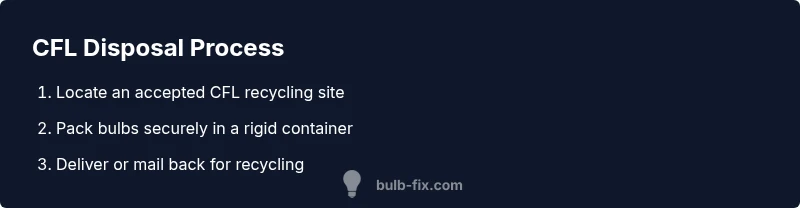
Safe CFL Disposal: A Practical Guide to Compact Fluorescent Bulbs
Learn safe, compliant CFL disposal: find drop-off sites, pack bulbs securely, and use recycling programs to prevent mercury pollution. Bulb Fix explains how to dispose of compact fluorescent bulbs.


You will learn how to dispose of compact fluorescent bulbs (CFLs) safely by locating local recycling or hazardous waste programs, preparing the bulbs, and using proper packing to prevent breakage. Before starting, gather a sturdy container, gloves, and the correct disposal drop-off locations.
The importance of proper CFL disposal
Compact fluorescent bulbs contain a small amount of mercury, along with glass and phosphor coatings. When CFLs are thrown away with regular trash, they can break and release mercury vapor or contaminate land and water if they end up in landfills. Regulations vary by city and state, so homeowners should treat CFL disposal as an environmental safety task rather than a routine item. According to Bulb Fix, most communities now require CFL recycling or hazardous waste drop-offs for used bulbs. Following these guidelines helps protect family health and local ecosystems. A deliberate approach includes locating approved drop-off centers, understanding packaging requirements, and following breakage-cleanup protocols to minimize exposure. By handling CFLs correctly, you support safer recycling streams and reduce pollution in your neighborhood.
Quick checklist before you dispose
Before you head out, assemble a small disposal kit: a sturdy container with a secure lid, gloves, safety glasses, packing material, tape, and a marker. Check the label on your bulb to confirm it is a CFL (not a compact fluorescent plug-in module) and determine if the site accepts straight bulbs or only tubes. Locate a local drop-off site or retailer program and note hours. If you can’t find a site, call your local environmental agency for guidance. Safety and proper planning reduce the chance of accidental breakage and exposure during transport.
Safe packaging and transport to a drop-off
Pack bulbs with care to prevent breakage during handling and transit. Wrap each CFL in tissue, newspaper, or bubble wrap and place upright in a rigid container with a secure lid. Cushion gaps with packing material and avoid tight packing that can crush the glass. Label the container clearly as CFL disposal to avoid misrouting at drop-off points. Transport the container with minimal jostling and keep it away from children’s reach. This disciplined approach minimizes the risk of mercury exposure if a bulb is damaged en route.
Where to dispose: recycling centers, retailers, and mail-back programs
CFL disposal options typically include local household hazardous waste facilities, electronics or waste centers, and retailer take-back programs. Many communities operate seasonal or year-round drop-offs for lamps, while some manufacturers offer mail-back options for bulk quantities. Start by checking your city’s environmental agency site or calling the listed disposal hotline. If you choose a retailer program, bring a fully intact CFLs or a small batch of bulbs for recycling; staff can guide you on the correct recycling stream and issue a receipt for your records.
Breakage protocol: what to do if a CFL breaks in your home
If a CFL breaks, evacuate the area and ventilate for several minutes. Put on gloves and avoid sweeping dried glass or powder. Use stiff paper or cardboard to scoop up large glass pieces, then use damp paper towels to wipe the smaller fragments. Place all waste in a sealable, sturdy container or bag and seal it tightly. Do not use a vacuum cleaner as it could spread mercury-containing dust. Finally, wash your hands and the affected area, and check local cleanup guidelines for any additional steps or disposal instructions.
Handling bulk CFL disposal responsibly
If you’re disposing of many CFLs, plan ahead by batching them into a single, secure container for transport. Confirm that the disposal site accepts bulk bulbs and whether advance notice is required. Scheduling a pickup or coordinating with a local waste facility can simplify the process. Keep a simple inventory of bulbs and dates of disposal for your records. By planning, you reduce multiple trips and minimize the chance of accidental breakage during transport.
Long-term tips: transition to LEDs and reduce CFL waste
LED bulbs offer longer lifespans, no mercury, and often lower overall cost of ownership despite higher upfront prices. Upgrading to LEDs reduces future disposal needs and simplifies waste management. Bulb Fix recommends evaluating rooms that use multiple CFLs and gradually replacing them with LEDs where practical. In addition, consider recycling CFLs as you upgrade, rather than accumulating a large stash for disposal at once. This approach aligns with safer, forward-looking home lighting practices.
Tools & Materials
- Sturdy rigid container with a secure lid(Plastic or metal tub with a tight seal works well; avoid cardboard boxes that can crush)
- Gloves (nitrile or latex)(Protect hands against glass and potential mercury exposure)
- Safety glasses(Shield eyes from shards if a bulb breaks)
- Wrapping material (newspaper, bubble wrap)(Use when packing a bulb to prevent movement)
- Duct tape or packing tape(Seal the container and wrap a bulb if needed)
- Marker and label(Label as CFL disposal or hazardous waste)
- Phone or access to the internet(To locate local drop-off sites and programs)
Steps
Estimated time: 30-90 minutes total depending on distance and bulb count
- 1
Identify disposal options locally
Start by checking your city or state environmental agency website for CFL recycling drop-off locations. If your municipality offers curbside HHW programs, note the schedule and any restrictions on bulb size or packaging.
Tip: Use a search like 'CFL disposal near me' to quickly locate approved sites. - 2
Gather PPE and a suitable container
Put on gloves and safety glasses. Select a sturdy container with a secure lid and clear labeling to hold one or more bulbs during transport.
Tip: Avoid overfilling the container; bulbs should not touch each other. - 3
Package bulbs for transport
Wrap each CFL in paper or bubble wrap and place it upright in the container. If shipping multiple bulbs, add cushioning and ensure the lid closes securely.
Tip: Do not shake or drop the container; vibrations can damage bulbs. - 4
Transport to a disposal drop-off
Take the container to the chosen drop-off site or retailer program. Hand over the bulbs to staff and request receipt or confirmation of recycling.
Tip: Keep the container upright; do not transport loose bulbs in a trash bag. - 5
Consider a mail-back option for bulk disposal
If you have a large quantity, some programs offer mail-back packaging. Follow the provided instructions and ship bulbs carefully to avoid breakage.
Tip: Verify mailing guidelines and any associated costs before shipping. - 6
Follow up and verify recycling
Ask for a recycling confirmation. If possible, log the disposal event for your records and local environmental reporting.
Tip: Record the site and date for future reference.
Got Questions?
Are CFLs considered hazardous waste?
CFLs contain mercury and should be treated as hazardous waste. Dispose at approved recycling or HHW facilities rather than regular trash.
CFLs contain mercury and must be disposed at approved facilities, not in regular trash.
Can CFLs be recycled curbside?
Most curbside programs do not accept CFL bulbs due to mercury. Use local recycling drop-offs or retailer programs.
Most curbside programs don’t accept CFLs; use local recycling centers or retailer take-back programs.
What should I do if a CFL breaks at home?
Avoid brushing with a broom; ventilate area, wear gloves, seal waste in a bag, and follow local cleanup guidelines.
Ventilate the area, wear gloves, seal the broken bulb in a bag, and follow local cleanup guidelines.
How should I store CFLs before disposal?
Keep unbroken CFLs upright in a sturdy container until you can take them to a disposal site.
Store unbroken CFLs upright in a sturdy container until disposal.
Are there mail-back options for bulk CFL disposal?
Some programs offer mail-back for bulk CFL disposal; check with your local recycler or retailer for details.
Some programs offer mail-back for bulk CFL disposal; check with your local recycler or retailer.
What if I can't find a local drop-off?
Call your city or state environmental agency for guidance on approved disposal options or mail-back programs.
If you can’t find a local drop-off, contact your environmental agency for guidance.
Watch Video
Key Points
- Identify safe disposal options before you need them
- Pack bulbs securely to prevent breakage
- Use official recycling or HHW programs when available
- Avoid curbside trash for CFL disposal
- Store and transport bulbs in a rigid container