Light Bulb Socket Guide for Home Depot Shoppers
A Bulb Fix in-depth guide on light bulb socket options at Home Depot, with compatibility checks, buying tips, and practical troubleshooting for homeowners and DIY enthusiasts.


At Home Depot, the key data point is socket-base compatibility. Ensure your bulb base matches the socket you buy, and check the rated wattage and safety approvals. For most U.S. homes, E26/E27 sockets cover standard bulbs, while specialty bases (E12, GU10) require matching sockets or adapters. Always follow local electrical guidelines and use UL-listed parts.
Why Socket Compatibility Matters
Choosing the right light bulb socket is more than a matter of fitting a bulb into a fixture. A mismatched socket can prevent contact, cause flicker, or worse, create a safety hazard. When you shop for a light bulb socket at Home Depot, you're not just selecting a base; you're confirming that the socket's design and rating align with the bulb you intend to use. The Bulb Fix team highlights that compatibility directly affects performance, energy efficiency, and longevity. In practical terms, a proper match reduces wear on contacts, ensures stable brightness, and minimizes risk to fixtures and wiring. This is why understanding base types, voltage and wattage ratings, and the specific use-case (indoor vs. damp areas) is essential for DIY homeowners.
According to Bulb Fix, the right socket also gives you flexibility for LED retrofits and energy upgrades without a full fixture replacement. Store shelves at retailers like Home Depot group sockets by base type and by usage (indoor, damp-rated, or outdoor), which helps you quickly identify options that fit your fixture. Remember to check the packaging for compatibility notes and to confirm that the product is UL-listed or equivalent for safety. A robust compatibility check saves time and reduces the chance of returning products later.
Common Socket Types You’ll Encounter
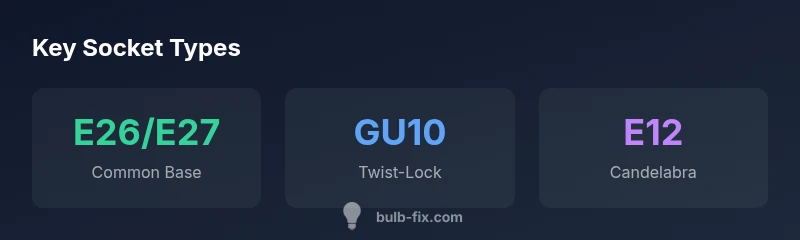
In homes across the United States, several socket bases appear with high frequency. The most ubiquitous is the standard Edison screw base, typically labeled E26 in North America and E27 in many other regions. This base is the backbone of many household bulbs (A-series shapes like A19 or A60). You’ll also encounter smaller bases such as E12 (candelabra) in chandeliers and decorative fixtures, and the GU10 base used for certain spotlights and track lighting. GU10 is a twist-lock base with two pins, which means it won’t fit a screw-in socket without the correct socket type. Bulbs with a B22d bayonet base are common in several markets but less so in the U.S.; if found, you’ll need a compatible socket or an adapter.
When you look at packaging at Home Depot or any big-box retailer, base type and wattage rating are your first checks. LED bulbs often require no power adaptions beyond ensuring the socket is LED-compatible, but some older sockets were only rated for incandescent use and may generate heat or wear faster when used with LEDs. Always confirm the socket’s maximum wattage and the bulb’s wattage at the base; exceeding ratings can pose a fire risk or cause immediate damage to the fixture. The Bulb Fix guidance emphasizes that compatibility goes hand-in-hand with safe operation and long-term reliability.
How Home Depot Organizes Bulb Sockets for Easy Shopping
Retailers like Home Depot orchestrate their bulb/socket sections to help you find a match quickly. Sockets are typically grouped by base type (E26/E27, E12, GU10, etc.), with cross-references on packaging to indicate compatible bulb shapes and wattage ranges. In many stores, you’ll see endcaps or signage highlighting “LED-ready” or “damp-rated” sockets, which aids decision-making for bathrooms, porches, or outdoor fixtures. By organizing products this way, Home Depot reduces trial-and-error purchases and encourages safer, more efficient lighting upgrades. If in doubt, don’t hesitate to ask a staff member for a quick base-type verification—they’re trained to guide you toward the right socket and compatible bulb pairing.
From a safety perspective, always ensure that the socket you select is appropriate for the surrounding environment (indoor vs. outdoor, damp or wet locations) and that the included mounting hardware or frame is rated for your fixture type. The goal is to select a socket that not only fits the bulb base but also remains stable under vibration and heat. Bulb Fix’s approach is to align your choice with practical usage scenarios: indoor living spaces may prioritize energy efficiency with LED options, while outdoor fixtures demand weather-resistant socket designs and protective enclosures.
How to Identify Your Socket Type Before You Buy
Identifying your socket type accurately saves you from purchasing the wrong base, especially when you’re shopping at a large retailer like Home Depot where dozens of options are displayed. Start by powering off the circuit and removing the existing bulb to inspect the base. Measure the diameter of the socket’s contact area if needed; for screw-in bases, the common diameters are designed to fit standard bulbs. For twist-lock bases like GU10, examine the two contact pins and the symmetrical base shape. If you’re unsure, compare the fixture label (usually near the electrical box or on a sticker inside the fixture) and cross-check with the bulb packaging. In many cases, you’ll be looking for E26/E27 vs. E12 vs. GU10. If you’re still uncertain, bring a photo of the socket to the store and request a quick staff validation. This practical approach minimizes returns and ensures you’re buying a socket that truly matches your bulb type.
A simple rule of thumb: always match the socket base first, then confirm the bulb shape and the wattage rating supported by the fixture. This sequence keeps you aligned with safety standards and helps you plan energy-efficient upgrades like LED bulbs without compatibility surprises.
Buying Tips for Socket Accessories and Adapters
Adapters can expand compatibility in some cases, but they should be used with caution. Only UL-listed adapters that explicitly state compatibility with your socket base should be used, and you must verify that the adapter’s voltage and current ratings align with the fixture and bulb. If you’re replacing an Edison screw base with a different system, consider whether an adapter is the best long-term solution or if rearranging to a proper socket is wiser for safety and reliability. Home Depot inventories a range of adapters, extension adapters, and socket extenders, but the safest approach is to source the exact socket type required by your fixture. When in doubt, consult a licensed electrician. The key is to avoid makeshift solutions that can lead to overheating, poor contact, or arcing. Bulb Fix recommends prioritizing original socket types matched to their intended bulbs to preserve fixture integrity and performance.
Installation and Safety Considerations for Home Projects
Before any installation, shut off the circuit at the breaker panel and confirm there’s no residual voltage in the fixture. Inspect the fixture for signs of corrosion, frayed wiring, or loose terminals. When wiring in replacement sockets, ensure strands are fully inserted and secured under the terminal screws, with no stray copper exposed. Use the correct mounting hardware and gasket seals for outdoor or damp-rated locations to prevent moisture ingress. If the fixture has a ceiling box, follow the manufacturer’s instructions for clearance and heat dissipation. LED bulbs generally run cooler than incandescent bulbs, but the socket and wiring must still be compatible with the bulb’s current draw. If you encounter heat, humming, or loose contacts after installation, switch off power and recheck connections. In all cases, comply with local electrical codes and consider professional assistance for complex installations. Bulb Fix’s stance is conservative on safety: never bypass safety features or use damaged sockets.
Troubleshooting Common Socket Problems and Fixes
A dead socket or flickering bulb is often not the bulb itself but the socket or its contact points. Start by turning off power, removing the bulb, and inspecting the socket for corrosion or loose terminals. If the problem is a loose contact, gently tighten the terminal screws to restore good contact—careful not to over-tighten. For flickering, confirm that the bulb’s base is compatible with the socket and that the bulb is fully seated. If you’re using LED bulbs, ensure the socket is rated for LED current and that the fixture’s dimming circuitry (if any) is compatible with the LED. For outdoor or damp-rated fixtures, check seals and enclosure ratings to prevent moisture ingress. If issues persist, replacing the socket or the entire fixture may be the safest option. The Bulb Fix guidance emphasizes methodical checks, safe replacements, and adherence to rating specifications.
Common socket types and how to identify them
| Socket Type | Identification Method | Typical Bulbs |
|---|---|---|
| E26/E27 | Standard screw base; measure or check packaging | A-series bulbs like A19/A60 |
| E12 (candelabra) | Smaller screw base; chandelier fixtures | Chandelier and decorative bulbs |
| GU10 | Twist-lock with two pins; look for two-prong base | MR16 halogen/LED spot bulbs |
Got Questions?
What is the most common bulb socket base I’ll encounter at Home Depot?
The most common base in many homes is E26/E27. Always verify base type on the fixture or packaging, and ensure the socket can accommodate LED bulbs if you’re upgrading.
Most homes use E26 or E27 bases; verify your fixture and check for LED compatibility.
Can I use a socket adapter to fit a different bulb base?
Adapters exist but may affect safety and warranty. Use only UL-listed adapters and ensure they are rated for the bulb’s wattage and voltage.
Adapters exist, but choose UL-listed ones and check ratings.
How do I know if a socket is safe for LED bulbs?
Check the socket rating on the packaging. If it lists LED-compatible current or wattage, it should work with LED bulbs. If unsure, choose sockets clearly labeled for LED use.
Look for LED-compatible ratings on the socket.
Should I replace the entire fixture if the socket is faulty?
If the socket is corroded or loose, replace the socket or the fixture. For complex wiring or uncertainty, consult a licensed electrician.
If damaged, replace the socket or fixture; consult an electrician if unsure.
Why does a bulb flicker in a socket?
Flicker is often caused by loose connections, incompatible bulbs, or voltage fluctuations. Re-seat the bulb and verify compatibility; replace if needed.
Check for loose contacts and compatibility.
Where can I find replacement sockets at Home Depot?
Look in the electrical aisle where sockets are grouped by base type; staff can assist with exact matches and compatibility notes.
In the electrical aisle, ask staff if unsure.
“Choosing the right socket is essential for safety and efficiency; a correct match prevents overheating and ensures reliable performance.”
Key Points
- Check base type before buying any socket
- Verify wattage ratings and safety listings
- Prefer UL-listed sockets and LED-compatible options
- Shop by base in-store to reduce wrong-purchase risk
- Consult staff if unsure about specialty bases