Do Smart Bulbs Use More Electricity? A 2026 Practical Guide
Explore whether smart bulbs consume more electricity than traditional bulbs, including standby power, usage patterns, and energy-saving strategies for homeowners in 2026.


Do smart bulbs use more electricity? Not necessarily. When actively in use, most smart LED bulbs consume roughly the same wattage as regular LEDs at the same brightness level. Any extra draw comes from standby energy and smart features. Overall, electricity use is driven by brightness and how long you keep the light on, not by the connectivity alone. If you dial the brightness down or use warm, steady light for shorter periods, you can achieve energy use competitive with non-smart LEDs. The key takeaway is that the “smart” part primarily affects convenience and control, not a default energy penalty. In this article we’ll unpack how to measure energy use accurately, what parts of the bulb contribute most to electricity consumption, and how to optimize for living room, kitchen, and outdoor lighting scenarios.
Energy Use Basics
Do smart bulbs use more electricity? Not inherently. In practice, the energy you expend is primarily determined by brightness and how long you keep the light on. Smart bulbs are typically LED devices that convert electricity into light very efficiently, so their active-wattage at a given brightness is similar to non-smart LEDs. The added electronics for connectivity and control can introduce a small overhead, but this is usually a tiny fraction of total energy use. For homeowners, the big question is usage pattern: longer hours and higher brightness drive energy costs more than any connectivity feature. In short, the smart part enables smarter scheduling and dimming, which can help you spend less on energy over time.
How Smart Bulbs Are Designed for Efficiency
Smart bulbs are built around efficient LED cores coupled with compact wireless modules and microcontrollers. The energy efficiency focus starts with lumens-per-watt and extends to firmware that minimizes idle draw. When you select a bulb with the right brightness for the task and use smart features to reduce unnecessary on-time, the energy impact remains modest. Feature-rich bulbs may offer color and dynamic scenes, but those features typically impact energy use primarily through brightness and duration, not through connectivity alone. The design goal is to preserve high light output while keeping extensible control lightweight for energy savings.
Standby Power and Connectivity
Connectivity requires keeping a communication channel alive, even when you’re not actively changing a scene. This standby power is usually a small portion of total energy use, but it can accumulate if you have many bulbs or aggressive automation. To limit standby impact, opt for bulbs and hubs that advertise low idle current and update firmware for energy management. In most homes, standby power remains a minor contributor unless lighting is left on for long periods or misconfigured automation triggers keep bulbs awake.
Brightness, Color, and Energy Use
Higher brightness and color-changing modes can push energy usage higher, but the incremental cost is often still manageable if you pair high brightness with shorter usage durations. Smart bulbs maintain a baseline wattage similar to white LEDs at the same brightness; the difference comes with the total hours of use and the frequency of switching between bright scenes. The practical advice is simple: use the minimum brightness required for the task, and avoid leaving lights on at full brightness without a purpose.
Real-World Usage Scenarios
A typical living room might use a smart bulb for several hours daily with occasional color scenes. A kitchen light may cycle brightness more often, while bathrooms experience brief, bright moments. In many homes, smart bulbs help reduce energy by enabling scheduled off-times, dimming, and multi-room automation. The key lesson is that energy use tracks with how you configure and deploy lighting, not merely with the presence of smart features.
How to Estimate Your Home Energy Cost
To estimate electricity cost for smart bulbs, multiply the active wattage by the hours you use the light per day, then multiply by your local rate. For example, an 8-watt smart bulb used 4 hours per day yields a monthly energy figure in the realm of a few kilowatt-hours, depending on rate. Replacing multiple incandescent bulbs with smart LEDs typically yields substantial savings because incandescent bulbs burn more watts for the same light output. The basic method—wattage × hours × rate—applies regardless of smart features.
Myths vs Reality
A widespread myth is that anything labeled smart necessarily consumes more energy. In reality, energy use is dominated by brightness and usage time. Standby power is a concern only when you have many bulbs or overactive automations. Modern smart bulbs are designed to minimize idle current, so the energy penalty from being connected is often negligible relative to the savings from reduced brightness and longer off times.
Practical Tips to Minimize Energy Use
- Schedule lights to turn off when rooms are unused and use automation to avoid leaving lights on accidentally.
- Prefer dimmed, warm white settings for general tasks; reserve high-brightness scenes for need-based use.
- Consolidate control through a single hub to minimize redundant automation that could keep bulbs awake.
- Choose bulbs with low idle current and test firmware updates that optimize energy management.
- Compare lumen output rather than wattage when shopping to ensure you get the right brightness efficiently.
What to Consider When Buying
When selecting smart bulbs, prioritize energy efficiency features: low standby current, solid dimming performance, and compatibility with your smart home ecosystem. Check lumen-to-watt ratios to ensure you get the brightness you need without unnecessary wattage. Review user feedback for real-world energy performance, and consider starter bundles to test how your space behaves with your typical routines.
Energy comparisons across bulb types
| Bulb Type | Typical Wattage (in use) | Standby Power | Notes |
|---|---|---|---|
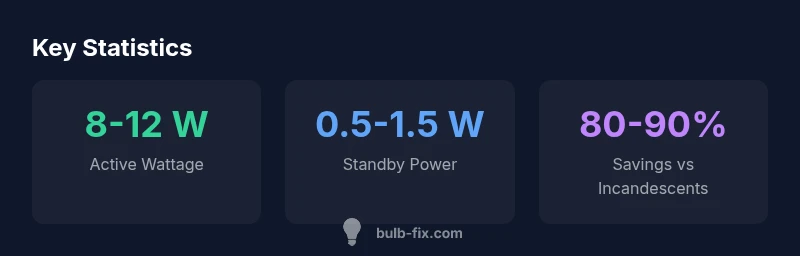
| Smart LED bulbs | 8-12 | 0.5-1.5 | Connectivity-enabled |
| Standard LED bulbs | 6-12 | 0-0.2 | No network features |
| Incandescent bulbs | 40-60 | 0 | Baseline energy |
Got Questions?
Do smart bulbs use more electricity when using color-changing features?
Color-changing modes can raise energy use if you keep brightness high, but the effect is primarily driven by brightness and duration. If you use color effects sparingly and maintain moderate brightness, the impact remains modest. The key is to balance color mode with practical on-time.
Color features can raise energy use if you keep brightness high, but it’s mostly about how long you stay in color modes.
Is standby power significant for smart bulbs?
Standby power is real but typically a small share of total energy, especially if you have a moderate number of bulbs. It becomes meaningful only when you have many bulbs or aggressive automation that leaves them powered in idle state.
Standby power is usually small, but it adds up with many bulbs or heavy automation.
How much energy can I save using smart bulbs compared to incandescent?
Compared to incandescent bulbs, smart LEDs generally consume far less energy for the same light output, often hundreds of watts saved per room over time. The exact savings depend on usage duration and lumens needed rather than just the bulb type.
Smart LEDs save a lot of energy versus incandescent bulbs, depending on how you use them.
Does dimming save energy with smart bulbs?
Dimming reduces power consumption because lower brightness uses fewer watts. The effect is straightforward: less light, less energy, provided you still meet the task lighting requirements.
Dimming reduces energy use by lowering brightness, as long as you still see clearly.
Can I disable standby power entirely?
Some setups let you disable certain automations or use hubs that put bulbs into deeper sleep modes. In practice, most users won’t need to disable standby entirely; optimizing routines is usually enough to keep energy costs low.
You generally don’t need to disable standby entirely; optimizing routines is usually enough.
“Smart bulbs themselves are not inherently high-energy devices; their energy footprint scales with how you use them and how efficiently your system manages idle power.”
Key Points
- Compare active wattage at the same brightness level.
- Standby power is real but usually small; manage it with settings.
- Use schedules and dimming to maximize savings.
- Energy costs track usage time and brightness more than smart features.