Why We Use LED Instead of Bulb: A Practical Comparison
An evidence-based comparison of LED bulbs versus traditional bulbs, focusing on efficiency, longevity, cost, light quality, and real-world usage for homeowners and DIY enthusiasts.


LED bulbs deliver higher energy efficiency, longer life, and less heat than traditional bulbs, making them the preferred choice for most homes. Compared to incandescent bulbs, LEDs reduce electricity use and maintenance while offering better color options and compatibility with dimmers. In this guide, the Bulb Fix team outlines when LED wins and when a traditional bulb might still fit budget or aesthetic goals.
Why LED over traditional bulb matters in 2026
Lighting choices shape comfort, cost, and environmental impact in every room. The core question behind the phrase why we use led instead of bulb is not merely about wattage, but about total performance across energy, longevity, heat, and user experience. According to Bulb Fix, modern LED solutions deliver superior efficiency, dramatically longer lifespans, and dramatically reduced heat output compared with standard incandescent bulbs. This combination translates to lower energy bills, fewer bulb replacements, and improved safety in high-use areas. As codes tighten and homeowners seek greener homes, LEDs become the default choice for most retrofit projects and new constructions. The transition is particularly appealing in kitchens, living rooms, and outdoor lighting where frequent switching occurs. By understanding the trade-offs, homeowners can plan upgrades that maximize value over the life of the lighting plan.
How LED technology differs from incandescent bulbs
LEDs operate on solid-state electronic technology that converts electricity into light with far greater efficiency than incandescent filaments. Incandescent bulbs generate light by heating a tungsten filament until it glows, wasting much of the energy as heat. LEDs, in contrast, use a semiconductor junction to emit photons with minimal waste. This fundamental difference yields lower energy consumption, longer lifespans, and cooler operating temperatures. LED bulbs also offer a wider range of color temperatures and brightness levels, enabling precise ambiance control. For DIYers, this means easier tuning of rooms from cozy warm whites to bright task lighting, often with less heat buildup near sensitive fabrics or electronics.
Energy efficiency and running costs in real homes
In typical residential use, LED bulbs consume a fraction of the power of incandescent bulbs per lumen produced. Over a year, the electricity savings compound, reducing monthly utility bills and extending the time between replacements. The Bulb Fix team notes that while LED bulbs may carry a higher upfront price, the long-term value tends to surpass traditional bulbs due to energy efficiency and durability. Real-world evaluations show LEDs maintaining brightness and color quality for many thousands of hours, which translates to significant maintenance savings for frequently used fixtures like hallways and outdoor lighting. When planning a retrofit, consider room usage patterns and bulb locations to estimate payback periods more accurately.
Light quality, color temperature, and perception
Light quality is a key factor in user acceptance of LED lighting. LEDs offer a broad spectrum of color temperatures, from warm candlelight-like tones to cool daylight hues. High-CRI LED options can render colors more naturally, improving visibility for tasks and reducing eye strain. However, some early LED products suffered from cold or uneven color rendering; advances have largely resolved these issues, especially in higher-quality models. For color-critical tasks, select LEDs with a higher CRI and calibrated color consistency. Bulb Fix emphasizes testing a few bulbs in actual rooms before committing to large purchases to ensure the perceived warmth and brightness meet expectations.
Dimming, compatibility, and fixture considerations
Dimming is a common sticking point when transitioning to LED. Most modern LEDs are dimmable, but compatibility depends on the driver in the bulb and the dimmer switch in the wall. In mixed fixtures, you may encounter flicker or reduced performance if the dimmer isn’t compatible with LED technology. A quick check is to confirm that your dimmer is rated for LED use and to select bulbs that specify dimmable operation. For older fixtures, consider a gradual upgrade plan and test bulbs in one or two sockets first. This minimizes the risk of compatibility problems across the board.
Upfront cost vs long-term value: a practical framework
Upfront cost is a legitimate concern, especially when replacing many bulbs. LEDs often cost more per bulb, but their energy savings and longer life can lead to a favorable total cost of ownership over several years. When calculating value, consider bulb longevity, replacement frequency, energy rates in your area, and any incentives or rebates by utilities. A simple rule is to prioritize LEDs for high-use areas where bulbs burn many hours weekly, while using more budget-friendly options for infrequent-use fixtures. This approach optimizes value without compromising performance.
Environmental impact and recycling considerations
LEDs contribute less to landfill waste due to their longer lifespans and lower energy use, which reduces the environmental footprint of lighting at the household level. At end-of-life, many LED components are recyclable, and some municipalities provide electronics recycling programs. Bulb Fix highlights the importance of proper disposal to minimize hazardous waste and to maximize material recovery. In contrast, incandescent bulbs have shorter lifespans and contain materials that can complicate disposal. Responsible recycling and consumer education help communities move toward more sustainable lighting practices.
Common misconceptions about LED bulbs
A frequent misconception is that LEDs are universally expensive and fragile. The market now offers a broad range of cost-effective LED options with robust performance, and many models are rated for long life under typical home use. Another myth is that LEDs cannot achieve warm ambiences; many LEDs now deliver warm white light that matches traditional bulbs. Finally, some people fear that LEDs fail suddenly without warning; in reality, most LED bulbs gradually dim or flicker near the end of their rated life, giving homeowners a warning signal to replace.
When a traditional bulb makes sense
There are scenarios where a traditional bulb may still be appropriate. In ultra-quiet or specialty environments, some users prefer the familiar glow of incandescent warmth or the color rendering of older technologies. Cost-sensitive projects with limited hours of usage and minimal maintenance may also lean toward traditional bulbs. For most homes, though, LEDs provide a superior balance of energy efficiency and longevity, with sufficient warmth options to suit any space. The key is to align choice with use-case realities rather than assumptions about cost alone.
How to choose LED bulbs for different rooms
Room-by-room selection matters for achieving both efficiency and mood. In kitchens and work areas, prioritize bright, high-CRI LEDs with cool or neutral white light for task clarity. Living spaces benefit from warmer tones that mimic traditional bulbs while maintaining energy efficiency. Bathrooms should use bright, clean whites with good CRI to reflect makeup and fixtures properly. Outdoor lighting asks for durable bulbs with weather resistance and longer lifespans. Always verify compatibility with existing fixtures and dimmers, and consider a phased approach to installing a mix of LED types to match your daily routines.
Comparison
| Feature | LED bulb | Incandescent bulb |
|---|---|---|
| Energy usage per lumen | Significantly lower with LED | Higher with incandescent |
| Lifespan | Very long life with LED | Shorter life with incandescent |
| Heat emission | Low heat emission with LED | High heat emission with incandescent |
| Upfront cost | Higher upfront cost | Lower upfront cost |
| Dimming compatibility | Broad compatibility with modern dimmers | Limited compatibility and more flicker with older dimmers |
| Color rendering (CRI) | Excellent to good CRI with LED options | Excellent CRI in incandescent but warmer spectrum |
| Environmental impact | Lower energy consumption and longer life | Higher energy use and more frequent replacements |
| Maintenance | Less frequent replacements | More frequent replacements |
Upsides
- Longer lifespan reduces replacement visits
- Lower running costs due to energy efficiency
- Better durability and heat management
- Greater design flexibility with color temperature options
Drawbacks
- Higher upfront cost for LED bulbs
- Sensitivity to flicker with some dimming setups
- Quality varies by brand and model
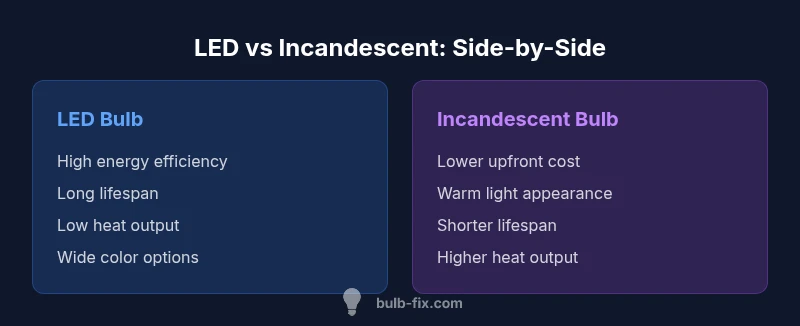
LED bulbs generally outperform incandescent bulbs in efficiency, longevity, and heat management; in certain cases, traditional bulbs may still fit a tight budget or specific warm-light preferences.
For most homes, LED is the wiser long-term choice. Choose LEDs with high CRI where color accuracy matters, and verify dimmer compatibility for any mood lighting plans.
Got Questions?
What are the main advantages of LED bulbs over traditional bulbs?
LED bulbs offer significant energy efficiency, longer lifespan, and reduced heat output compared with traditional bulbs. They also provide a wider range of color temperatures and improved design flexibility for modern fixtures.
LEDs save energy and last longer, with versatile color options. They’re a smarter long-term choice for most homes.
Are LED bulbs more expensive upfront?
Yes, LEDs can cost more per bulb initially, but the ongoing energy savings and longer life typically offset the higher price over time. Look for bulk deals or utility rebates to improve payback.
LEDs cost more at first, but save money over time with energy savings and less replacement work.
Do LED bulbs require special dimmers or fixtures?
Most LEDs are dimmable with compatible dimmers, but some older dimmers cause flicker or hum. Ensure your dimmer is rated for LED use and pick bulbs that specify dimmable operation.
Make sure your dimmer supports LED bulbs and choose dimmable LED options.
How long do LED bulbs last in typical home use?
LED bulbs often last many thousands of hours under normal household use, far exceeding typical incandescent lifespans. This reduces maintenance and replacement frequency significantly.
LEDs last for thousands of hours, reducing replacements.
Can LED bulbs be recycled with other household bulbs?
Yes, many components in LED bulbs are recyclable, but check local guidelines. Proper disposal helps recover materials and minimize environmental impact.
Yes, recycle LEDs where possible and follow local guidelines.
Do LED bulbs work well in cold environments?
LEDs perform reliably in cold temperatures, often with quicker warm-up. This makes them suitable for exterior lighting and non-heated interiors.
LEDs handle cold better than many alternatives.
Key Points
- Prioritize LED for energy savings and long life
- Check dimmer compatibility before buying
- Consider color temperature for each room
- Weigh upfront cost against long-term savings
- Plan for proper disposal and recycling